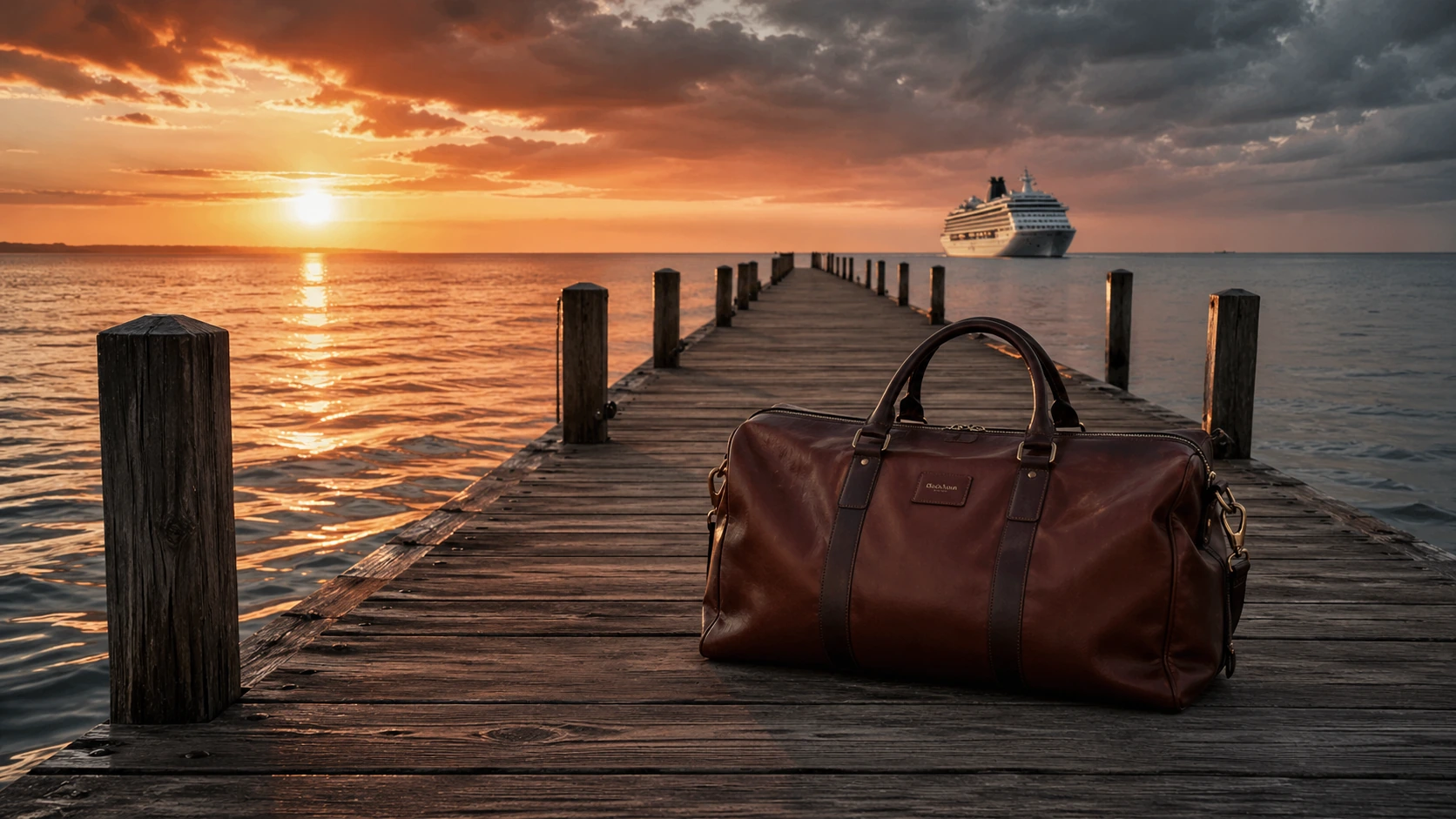
The bottom line
If you miss the ship, your first job is not to chase it. Your first job is to contact the port agent, the cruise line’s emergency contact, your tour operator, and your travel insurer. You may need to arrange transportation to the next port, replace missing documents, or pay expenses upfront before making an insurance claim.
The best solution is prevention: know the all-aboard time, stay on ship time, carry essentials ashore, and build a real return buffer.
First: understand “all aboard”
The ship’s departure time is not the same as the all-aboard time. Royal Caribbean says guests are generally advised to be back onboard before sailing, and the all-aboard time is usually scheduled about 30 minutes before departure, though passengers should verify the posted time once onboard.
That posted time is the time that matters. Not your phone’s local time. Not the tour guide’s estimate. Not the time printed on a port schedule you found online.
Before stepping off the ship, take a photo of:
- the gangway sign,
- the all-aboard time,
- the port-agent contact,
- the ship’s emergency number if listed,
- your tour confirmation.
If you are late but the ship has not left
Call immediately. Do not wait until you can “almost see the pier.”
Contact:
- Your tour guide or driver.
- The port agent listed in the daily program or posted near the gangway.
- The cruise line’s emergency contact.
- A traveling companion onboard, if you have one.
Explain where you are, how many people are with you, whether anyone is ill or injured, and your estimated arrival time. The ship may not wait, but the people coordinating the departure need accurate information.
If the ship has already left
Start with the port agent. The port agent is the local contact who works with the ship while it is in port. They may help coordinate documents, communicate with the ship, and point you toward the next steps.
Then contact the cruise line’s emergency team. Royal Caribbean says guests who miss a cruise departure due to travel delays can contact its Emergency Travel Team to discuss options, and in specific cases passengers with proper documents may be able to join at the next port.
You should also call your travel insurer as soon as possible. Ask what documentation is required before you buy flights, hotels, taxis, or ferries. Keep every receipt.
What about your passport?
This is why carrying proper identification ashore matters. In some missed-ship situations, ship staff may retrieve passports from the safe and leave them with the port agent, but you should never rely on that as your plan.
For closed-loop cruises where you boarded with a birth certificate and ID instead of a passport, rejoining the ship in another country can become far more complicated. For international cruises, a passport is often the difference between an expensive inconvenience and a logistical nightmare.
If your passport is lost, unavailable, or locked onboard, contact the nearest U.S. embassy or consulate. The U.S. State Department lists emergency help numbers for U.S. citizens abroad, including 888-407-4747 from the U.S. and Canada and +1-202-501-4444 from overseas.
Who pays?
If you missed the ship while on an official cruise-line excursion, the cruise line’s policies may protect you. Royal Caribbean says it will wait or make arrangements when one of its booked excursions is delayed. Carnival says a benefit of booking through Carnival is that the ship remains in port until all guests on Carnival excursions are back onboard.
If you were touring independently, you should assume that hotels, transportation, meals, replacement documents, and rejoining the ship are your responsibility unless your travel insurance covers them.
Prevention checklist
Before leaving the ship, carry:
- ship card,
- government ID,
- passport or passport copy, depending on itinerary,
- credit card,
- emergency cash,
- phone and portable charger,
- travel insurance contact,
- port-agent contact,
- tour confirmation,
- medication needed for the day plus extra.
CruiseProdigy take
Missing the ship is rare, but it is not imaginary. The goal is not to be afraid of private excursions. The goal is to avoid fragile plans.
A good private tour returns early. A good cruise-line tour protects your timing. A good cruiser carries the information needed to solve the problem if the day goes wrong.