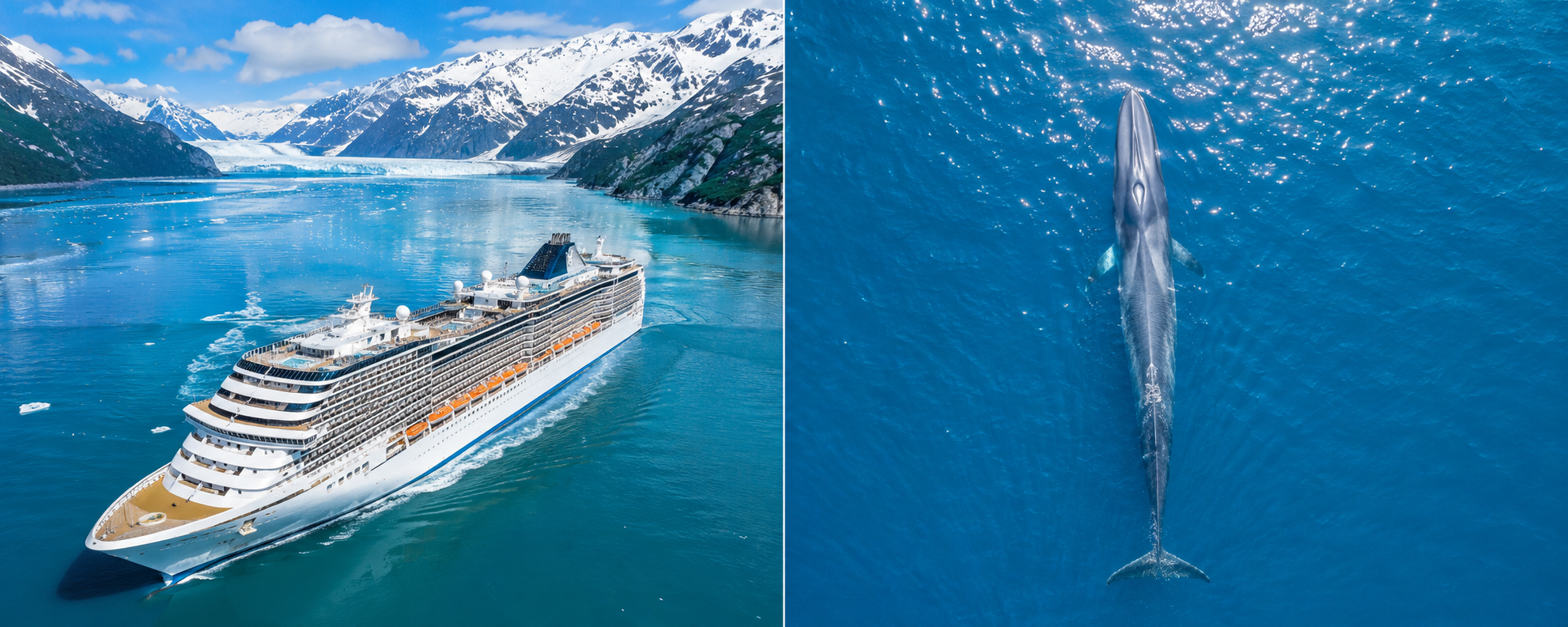
Dead, Pregnant Fin Whale Found on the Bow of Royal Caribbean's Ovation of the Seas — NOAA Opens a Federal Investigation
On June 19, 2026, Ovation of the Seas, a Royal Caribbean Quantum-class ship carrying more than 4,000 guests, arrived at its home port of Seward, Alaska with a dead, roughly 61-foot fin whale draped across its bulbous bow. The whale was confirmed pregnant and had died only recently. Fin whales are the second-largest animal on Earth and have been listed as endangered under the Marine Mammal Protection Act since 1970, after commercial whaling decimated the population in the 1800s and 1900s.
What investigators found
NOAA's Office of Law Enforcement opened a federal investigation the same day, and a preliminary necropsy released June 23–24 found blunt-force trauma to the whale's jaw, spine, and ribs consistent with a vessel strike. The whale was otherwise healthy. A final, official cause of death is still pending further testing, which officials say can take months to complete — investigators are examining exactly how the strike occurred and whether existing vessel-speed protections in the area were followed.
Royal Caribbean's response
A Royal Caribbean Group spokesperson said the company is "deeply saddened by the whale incident involving one of our ships en route to Seward and take any impact to marine life with the utmost seriousness," adding that the line is cooperating fully with NOAA and will act on its findings once the investigation concludes.
Why this matters beyond one ship
Alaska's short summer season packs enormous ship traffic into the same waters — the Gulf of Alaska and Inside Passage — that fin, humpback, and gray whales use to feed. A 61-foot whale is enormous, but at cruising speed a ship's bridge crew can still miss one in time to avoid a strike, which is why NOAA maintains voluntary and, in some zones, mandatory slow-speed guidance during peak whale season.
No current sailings or itineraries are affected — this is an active federal investigation, not an operational shutdown. Here's what's worth keeping in mind if you're sailing Alaska this summer:
- Expect extra scrutiny in whale-heavy waters. Don't be surprised if your ship runs at a more conservative speed through known feeding grounds like Glacier Bay or the Inside Passage this season — that's a good sign, not a delay to complain about.
- Choose whale-watching excursions carefully. Book operators that follow NOAA's marine-mammal viewing guidelines (keeping distance, cutting engine speed near whales) rather than the cheapest tour on the pier.
- This is a marine-mammal story, not a safety story for passengers. There's no indication of any risk to guests or crew; the investigation concerns the whale strike itself.