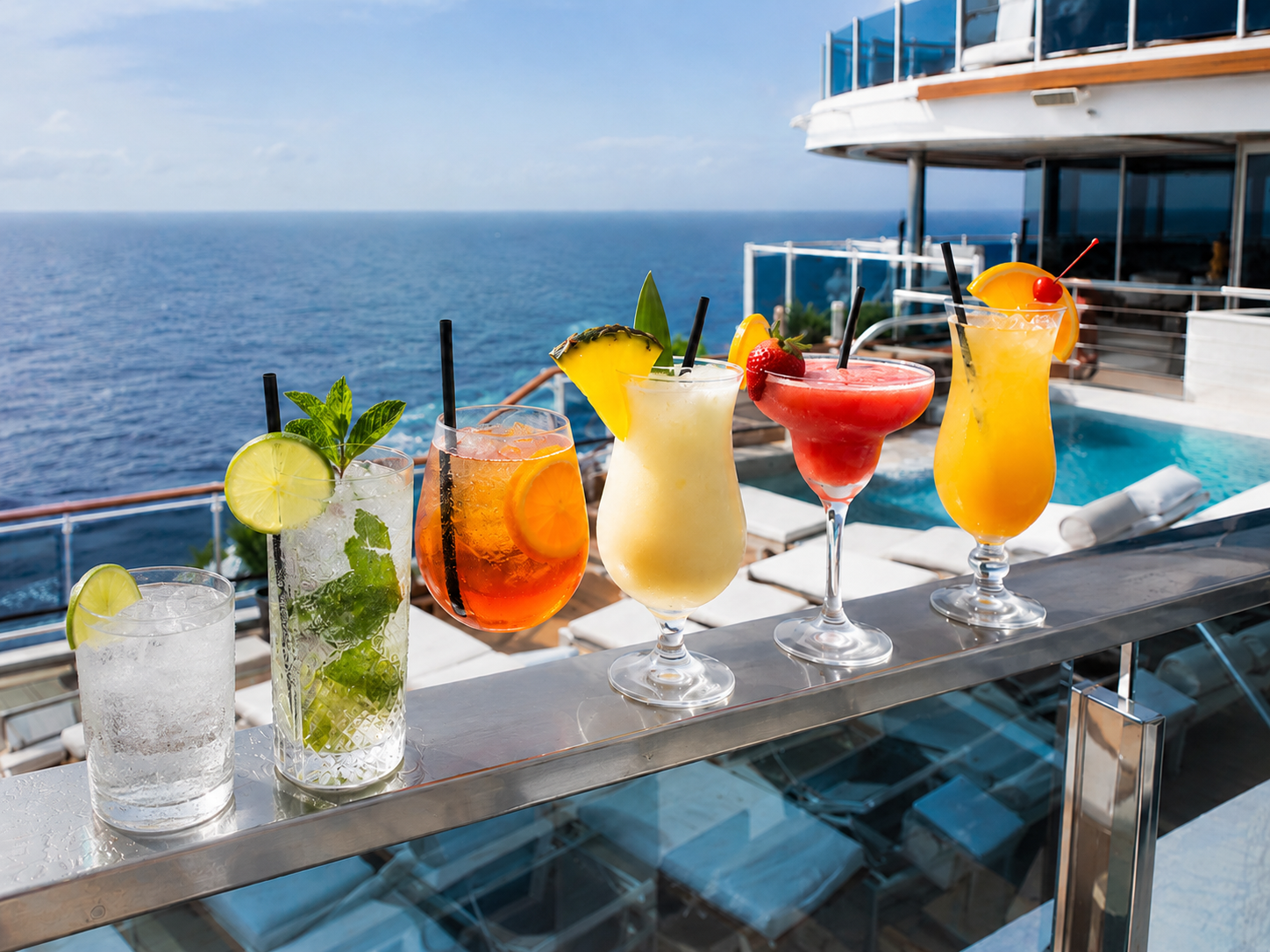
A cruise drink package is worth it only if you drink a lot — roughly five to seven drinks a day, every day. On most mainstream lines an unlimited alcohol package runs about $70 to $100 per person, per day once the automatic gratuity is added, so that's the bar you have to clear. Cocktails from the pool deck at lunch, wine at dinner, a nightcap at the bar, plus the specialty coffees and bottled waters in between — if that's your day, the package usually wins and kills the running-tab math.
If you have a glass or two with dinner and little else, you'll almost certainly spend less paying as you go. This guide — part of our New to Cruising guide — gives you the break-even number, a calculator for your exact habits, and the two gotchas (the gratuity on top and the everyone-in-the-cabin rule) that quietly sink the deal.
The break-even number, plainly
Forget the marketing. A drink package is just a bet: you're wagering that what you'd drink à la carte costs more than the flat daily price. To win that bet you need to know two numbers — the all-in package price, and what your drinks would cost one at a time.
Onboard drink prices are remarkably consistent across the mainstream lines. A cocktail runs about $13 to $15, a beer $8 to $9, a glass of wine $11 to $14, a specialty coffee $5 to $6, and a soda or bottled water $3 to $4 — and every one of those carries an automatic gratuity of 18 to 20 percent on top. Stack those against a package that lands near $80 a day all-in and the break-even point falls at roughly five to seven alcoholic drinks per day, or a slightly larger mix once you fold in coffees, juices, and waters.
"The package isn't a discount — it's insurance against a big bar tab. It only pays off if you were going to run up that tab anyway."
That's the honest framing the cruise lines won't put on the brochure: a package never makes drinks cheaper, it makes a heavy-drinking day predictable. The mistake first-timers make is buying it "to be safe" and then drinking like moderate people — paying $95 a day to consume $40 of drinks. Where it really earns its keep is the peace of mind: no mental tally, no flinching at the end-of-cruise folio, no rationing a vacation. For some people that comfort is worth the premium even when the raw math is a wash. Just go in knowing it's a comfort purchase, not a saving.
Calculate it for your trip
Plug in what you'd actually drink on a typical day — be honest, not aspirational — and the package's daily price. The calculator compares your pay-as-you-go cost against the package and tells you whether you're winning the bet, and by how much over the whole cruise.
Your drinks on a typical day (prices below are rough onboard averages including the 18–20% gratuity):
Your verdict
Onboard prices vary by ship and line; adjust the package price to match the quote you were given.
One honest caveat the calculator can't show: it assumes you'd buy every one of those drinks anyway. The package's hidden trap is that "unlimited" nudges you to drink more than you otherwise would — which feels like winning but isn't if you didn't want the extra drinks. Count what you'd order without a package, not what you might order with one.
The two gotchas that sink the deal
Most "is it worth it" arguments online ignore the two rules that do the most damage to the math. Both catch first-timers, and both are decided before you ever board.
1. The gratuity is added on top
The price you see advertised is almost never the price you pay. Lines tack on an automatic gratuity of 18 to 20 percent, so a package marketed at "$80 a day" actually bills at roughly $95 to $96. Over a seven-night cruise that surcharge alone is well over $100 per person. It's the same gratuity-on-extras mechanism we cover in our guide to cruise gratuities — and it's non-negotiable, unlike the daily auto-gratuity. Always do your break-even math on the all-in number, not the headline.
2. Everyone in the cabin usually has to buy one
This is the rule that quietly kills more deals than any other. On Royal Caribbean, Carnival, Celebrity, and most mainstream lines, if one adult in a stateroom buys an alcohol package, every adult of legal drinking age in that cabin has to buy one too. The policy exists to stop one package from covering the whole room. The practical effect: a couple where only one person really drinks can't buy a single package — they either pay for two or pay as they go. For that couple, the package almost never makes sense, no matter how much the drinker consumes.
So even if your personal number clears the break-even bar, run it for both of you. A package that's a clear win for a heavy drinker becomes a clear loss the moment it's forced onto a partner who'll use a fraction of it. Bundling alcohol is one of the biggest budget surprises we flag in our rundown of first-time cruise mistakes.
How the packages differ by line
The break-even logic is universal, but the details — price, drink caps, and how the package is sold — vary. Here's how the major lines stack up. Treat the prices as current ballparks; lines use dynamic pricing and adjust rates periodically, and booking before you sail is almost always cheaper than buying onboard.
| Cruise line | Package | Roughly per day (all-in) | Drink limit | All adults must buy? | Worth knowing |
|---|---|---|---|---|---|
| Royal Caribbean | Deluxe Beverage Package | ~$85–$125 +18% on the base | No hard cap; per-drink price ceiling (you pay the difference above it) | Yes | Heavily dynamic pricing — the same package can swing $40+ by ship and date. Cheapest booked pre-cruise. |
| Carnival | CHEERS! | ~$83–$95 incl. 20% | 15 alcoholic drinks / day; soft drinks unlimited | Yes | Per-drink price ceiling around $20. Cheaper bought before the cruise than onboard. |
| Norwegian (NCL) | Beverage package (often a "Free at Sea / More at Sea" perk) | Promo "free," but you pay the ~20% gratuity on its value | No hard cap | Applies to the first two adults in the cabin | Marketed as included, so read what the gratuity actually costs — it's not truly free. |
| Celebrity | Classic / Premium (often in an "Always Included" fare) | Frequently bundled into the fare; upgrade Classic→Premium for a daily fee | Classic has a per-drink price ceiling; Premium lifts it | Tied to the fare for both guests | If your fare already includes Classic, only upgrade if you order premium spirits or fine wine. |
| MSC | Easy / Premium Extra (tiered) | ~$50–$75 + gratuity | No hard cap; lower tiers cap per-drink value | Typically yes for adults in the cabin | Among the cheaper packages, but the entry tier excludes higher-end pours. |
Figures are approximate all-in ballparks and move with dynamic pricing; confirm current rates and policies with your line before booking.
The pattern across the table: alcohol is the single biggest "not included" category on a cruise, which is exactly why packages exist and why they're priced to win for the line, not for you. For the full picture of what your fare does and doesn't cover, see what's actually included on a cruise, and where the package fits in your overall budget in how much a cruise really costs.
Our honest take: who should buy, who should skip
After running the math for every kind of drinker, the split is clean. The package is a genuinely good deal for a specific person and a genuinely bad one for everyone else — and the cruise lines bank on the "everyone else" group buying it anyway.
- You genuinely drink all day — poolside at noon, wine at dinner, a nightcap after the show.
- Both adults in the cabin drink at a similar, steady pace.
- You value never thinking about a tab more than the raw dollars.
- You also lean on specialty coffees, fresh juices, and bottled water that add up.
- Your itinerary is sea-day heavy, so you're aboard (and drinking) most of the time.
- You're a one-or-two-drinks-with-dinner kind of traveler.
- Only one person in your cabin really drinks (the forced second package kills it).
- You're port-intensive and off the ship most days.
- You'd be buying it "to be safe" rather than to match real habits.
- A non-alcoholic or soda package — or bringing your allowed bottle of wine aboard — covers what you actually want.
If you land in the "skip it" column, you're not giving anything up — you're just paying for what you drink, which for most people is the cheaper path. A lighter, smarter approach to onboard spending is its own skill; we cover the broader version in our guide to saving money on a cruise. And if a term in your booking confirmation trips you up — the cruise glossary defines the jargon, including the all-inclusive language lines lean on and the sommelier-stocked wine lists the premium tiers unlock.
Frequently asked questions
Is a cruise drink package worth it?
It depends entirely on how much you actually drink. On most mainstream lines an all-inclusive package lands somewhere around $70 to $100 per person, per day once the automatic gratuity is added, so you need roughly five to seven drinks a day just to break even. If you order cocktails, specialty coffees, bottled water, and the occasional beer from morning to night, the package usually pays off and removes the running-tab anxiety. If you have a glass or two with dinner and not much else, you'll almost always spend less paying as you go. Run your honest daily count through the calculator above before you commit.
How many drinks do you have to buy to make a drink package worth it?
As a rule of thumb, you break even at about five to seven alcoholic drinks per day. The exact number depends on the package price and what you order: at roughly $14 to $15 per cocktail with gratuity, a package near $80 a day pays for itself at around six cocktails. But you don't have to hit that with alcohol alone — specialty coffees, fresh juices, sodas, and bottled water all count toward the total, so a moderate drinker who also grabs a latte each morning and water at the gym can get there faster than the headline number suggests.
Do both people in a cabin have to buy the drink package?
On most mainstream lines — Royal Caribbean, Carnival, and Celebrity among them — yes. If one adult in the stateroom buys an alcohol package, every adult of legal drinking age in that same cabin generally has to buy one too. The rule exists to stop one person's package from quietly covering everyone's drinks. It's the single biggest reason a package that looks worth it for a heavy drinker stops making sense for a couple where only one person really drinks — you can't buy just one. Always confirm your specific line's policy before booking.
Is gratuity included in a drink package price?
Usually not in the advertised number. Most lines add an automatic gratuity of 18 to 20 percent on top of the package's base price, so a package marketed at around $80 a day actually costs closer to $95 to $96 once the service charge is applied. This is the most common surprise first-timers hit, because it widens the gap you have to close to break even. A few lines fold the gratuity into the quoted price — read the fine print so you're comparing the real all-in cost, not the marketing figure. It's the same surcharge we explain in our gratuities guide.
Can you bring your own alcohol on a cruise instead?
Partly. Most major lines let each adult bring a limited amount of wine or champagne aboard at embarkation — commonly one bottle per person — and many allow a modest quantity of non-alcoholic drinks like soda or water. Hard liquor and beer are generally not allowed in your carry-on and will be held until the end of the cruise. So bringing your own can shave the cost of wine with dinner, but it won't replace a package if you want cocktails and beer poured throughout the day. Check your line's current beverage policy, as the allowances change.
What is the cheapest way to drink on a cruise?
For light and moderate drinkers, paying as you go is almost always cheapest — you only pay for what you order, and a glass of wine with dinner each night costs far less than a daily package. Bringing your allowed bottle of wine aboard trims it further. For heavy, all-day drinkers, the package is usually the cheaper path because it caps a cost that would otherwise spiral. The middle ground — a soda or non-alcoholic package, or a punch card of a set number of drinks where offered — can suit someone who wants unlimited soft drinks and specialty coffees without paying for an alcohol package.