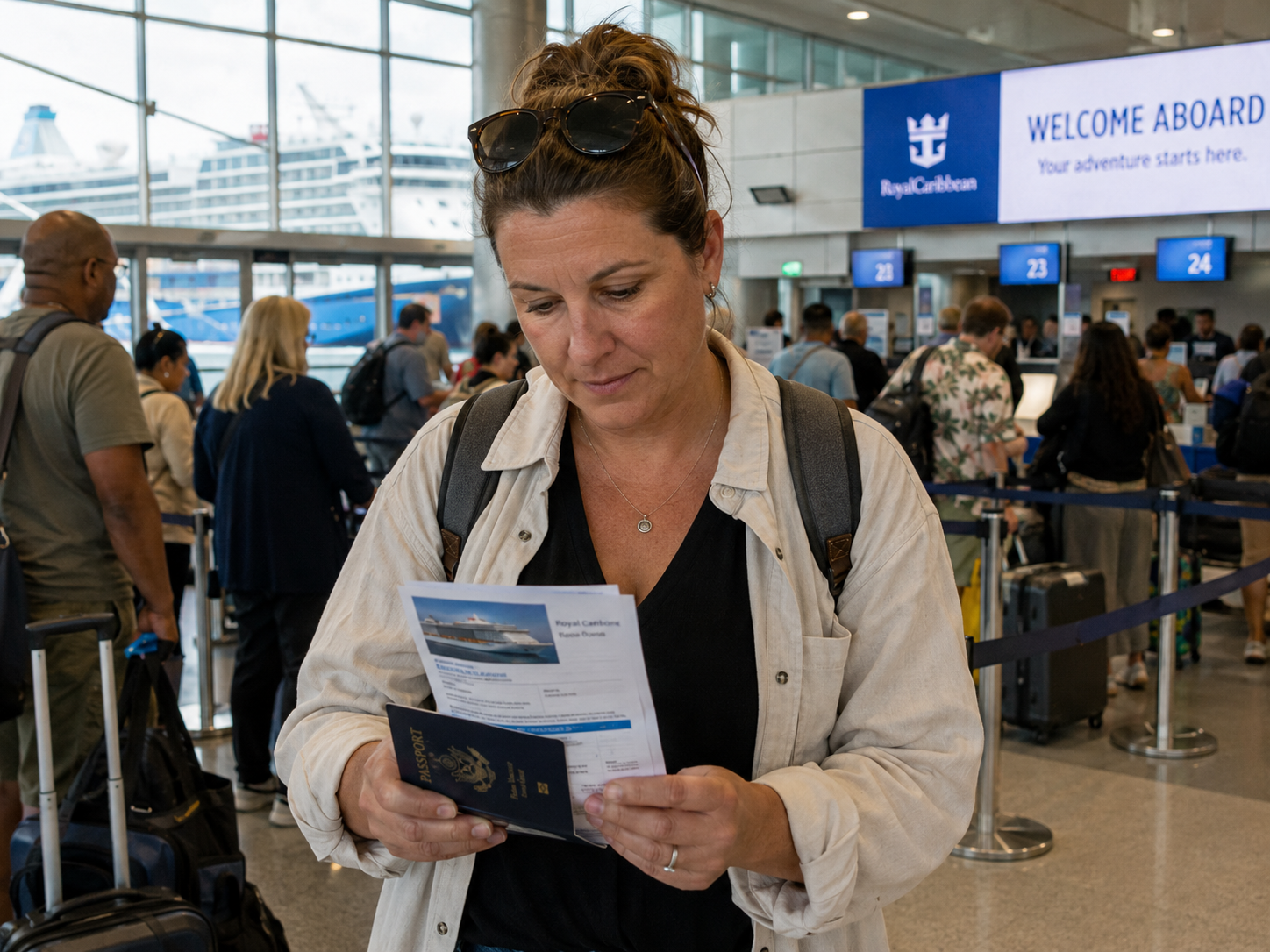
Most first-time cruise mistakes fall into a simple pattern: people assume a cruise works like a flight or a hotel, and it doesn't. The single most damaging error is booking a same-day flight to the port — miss the ship and your trip is over before it starts. The most common errors are smaller: under-budgeting for gratuities and extras, packing banned items, and treating onboard timing as flexible when it isn't.
The good news is that every one of these is avoidable once you know it's coming. This guide — part of our New to Cruising guide — walks through the twelve that catch the most first-timers, ranked by what they cost, with a plain fix for each.
We've grouped the mistakes by when they happen — before you book, before you sail, onboard, and in port — because that's the order you'll need the fixes. If you only have a minute, the ranked table further down sorts all twelve by how much damage they can do.
Before you book
01 Booking before you know cruising suits you
Cruising is a specific kind of vacation: convenient, social, and broad rather than deep. If your ideal trip is unstructured days in a single place, a big-ship sailing can disappoint you no matter how much you spend. Plenty of first-timers book on a deal, discover mid-cruise that the format isn't for them, and write off cruising entirely — when the real problem was a mismatch.
02 Picking a line on price alone
The cheapest fare is not a bargain if the ship is built for someone else. A party-forward mega-ship and a quiet premium line can sail the same itinerary at similar prices and deliver completely different vacations. First-timers who choose purely on the headline number often end up on the wrong ship for them — too rowdy, too sedate, or short on the things they actually care about.
03 Skipping travel insurance
This is the mistake people regret most when it bites. The risk that matters isn't a cancelled trip — it's a medical emergency. A serious illness or injury at sea or in a foreign port can require an evacuation that runs into the tens of thousands of dollars, and many domestic health plans won't cover care outside the country at all.
Before you sail
04 Booking a flight that lands the day the ship sails
This is the big one. A 10 a.m. flight into the port city for a 4 p.m. departure feels safe, but a single mechanical delay or an afternoon thunderstorm can leave you watching the ship pull away. Because you booked the flight separately, the cruise line owes you nothing — you've lost the cruise and you're paying to chase it to the next port, if you can reach it at all.
05 Over-packing — and forgetting the things that matter
First-timers tend to pack like they're moving aboard, then discover the cabin is small and half of it never leaves the suitcase. Meanwhile the genuinely useful items — a small power bank, motion-sickness remedies, a lanyard for your room card, a day bag for embarkation — get left at home.
06 Packing a surge protector or an iron
This one surprises almost everyone. Surge protectors are banned on virtually every cruise line — a ship's electrical system makes them a real fire hazard — and several lines now prohibit power strips entirely. Clothing irons and garment steamers are also forbidden. If security finds them in your bag, they're confiscated and held until the last day.
Once you're onboard
07 Leaving your phone off airplane mode
The moment the ship leaves the coast, your phone latches onto the ship's satellite cellular network — and background email, app updates, and photo backups can quietly run up hundreds of dollars in roaming charges before you've even reached the first island.
08 Treating the muster drill as optional
The safety muster drill is mandatory and federally required — the ship legally cannot sail until every guest has checked in. Most lines now use an "e-muster" where you watch a short safety video in the app and then scan in at your assigned station. Ignore it and your name gets called over the loudspeaker until you appear, which is a poor way to start a vacation.
09 Under-budgeting for gratuities and extras
The advertised fare is almost never the final price. Daily gratuities are added automatically (roughly $16–$20 per person, per day on the mainstream lines), and drinks, Wi-Fi, specialty restaurants, and excursions stack on top. None of it is hidden, but it blindsides people who only budgeted the headline number.
10 Living at the buffet and missing what's included
It's easy to spend an entire first cruise orbiting the buffet, the pool, and the nearest bar — and miss that the main dining room, most shows, and a stack of activities are already included in what you paid. First-timers routinely leave value on the table simply because they didn't know it was there.
In port
11 Assuming ship excursions are your only option
Cruise-line shore excursions are convenient and carry one real guarantee — book through the ship and it won't leave without you if the tour runs late. But they're also marked up, and many first-timers assume they have no alternative, paying premium prices for crowded bus tours when a well-chosen independent option would cost less and feel more personal.
12 Missing the all-aboard time
The all-aboard time is firm, and it's usually 30–60 minutes before the ship's actual departure. The ship will leave without stragglers — and unlike a missed muster, this one strands you in a foreign port at your own expense to catch up at the next stop. Ship's time can also differ from the local time on your phone, which is how people get caught out.
The mistakes, ranked by what they cost you
Not every mistake is equal. A few can end or seriously dent your trip; most are recoverable annoyances. Here's the honest ranking — sort your attention accordingly.
| Mistake | What it can cost | The fix | Severity |
|---|---|---|---|
| Same-day flight to the port | The entire cruise — miss the ship and the line owes you nothing | Fly in the day before; sleep near the terminal | Trip-ending |
| Missing the all-aboard time in port | Stranded abroad; pay your own way to the next port | Use ship's time; build in a buffer | Trip-ending |
| Skipping travel insurance | $30,000+ for a medical evacuation | Buy a policy with medical + evacuation cover | Severe |
| Phone left off airplane mode | Hundreds in surprise roaming charges | Airplane mode the moment you sail away | Pricey |
| Under-budgeting gratuities & extras | 30–50% over the fare you didn't plan for | Budget for tips and the extras you'll use | Pricey |
| Booking on price / wrong line | A week on a ship built for someone else | Match the line to who you are | Disappointing |
| Packing a surge protector or iron | Confiscated at security; held till day one's end | USB block + ship's laundry/press | Annoyance |
| Ignoring the muster drill | Public name-calling; can delay the sailing | Scan in the moment you board | Annoyance |
| Over-packing / forgetting essentials | Cramped cabin; missing what you needed | Pack from a real cruise list | Annoyance |
| Living at the buffet | Paid-for dining and shows you never used | Read the daily planner; book ahead | Missed value |
The ten above are the highest-impact of the twelve; the remaining two (booking before knowing cruising suits you, and assuming ship excursions are your only option) are upstream judgment calls rather than single-moment slip-ups.
Our honest take: the two that actually matter
If you do nothing else, get the timing and the budget right. Most of this list is recoverable — a forgotten charger, a missed show, an iron in lockup. Two are not. Miss the ship and the trip is gone; skip evacuation insurance and a bad day can become a financial disaster. Everything else is a rounding error by comparison.
"Spend your worry budget on the two mistakes that can end your trip. Treat the rest as the small tuition every cruiser pays once."
- Getting to the ship on time (fly in the day before).
- Making every all-aboard time in port.
- Carrying medical + evacuation insurance.
- Budgeting honestly for gratuities and extras.
- Forgetting one or two small items.
- An iron or surge protector pulled at security.
- Not seeing every show or venue.
- Choosing the "perfect" cabin down to the deck.
That's the whole philosophy: front-load your attention onto the handful of decisions that are hard to undo, and let the small stuff be small. Do that and your first cruise will feel less like a test and more like the easy vacation it's supposed to be.
Frequently asked questions
What is the biggest mistake first-time cruisers make?
Booking a flight that lands the same day the ship sails. A single delayed flight or summer storm can leave you watching the ship leave without you, and the cruise line owes you nothing because you booked the flight separately. Fly in the day before and sleep near the port. It's the cheapest travel insurance you'll ever buy, and it removes the one mistake on this list that can end your trip before it begins.
What should you not do on a cruise?
Don't leave your phone off airplane mode at sea (background data can run up hundreds in roaming charges), don't skip or arrive late to the muster drill (the ship legally cannot sail until everyone checks in), don't assume the headline fare is the final price (budget 30–50% extra for gratuities, drinks, Wi-Fi, and excursions), and don't pack a surge protector or iron — both are banned and will be confiscated. Each of these is easy to avoid once you know it's coming.
What should first-time cruisers know before they go?
Three things matter most. First, the advertised fare is not the total — daily gratuities and onboard extras add a meaningful amount, so budget for them. Second, you have to get yourself to the ship on time; the all-aboard time in each port is firm and the ship will leave without stragglers. Third, the ship and line you pick shapes the entire trip, so choose based on who the line is built for rather than price alone. Get those three right and most rookie problems disappear.
How much extra money should I budget for a cruise beyond the fare?
Plan on roughly 30–50% above the cruise fare for a typical first sailing. The largest predictable line item is daily gratuities (around $16–$20 per person, per day on the mainstream lines), followed by drinks, Wi-Fi, specialty dining, and shore excursions. None of it is hidden, but it surprises people who only budgeted the headline price. Decide in advance which extras you'll actually use and leave the rest.
Do I really need travel insurance for a cruise?
For most cruisers, yes. The reason isn't trip cancellation — it's medical evacuation. A serious illness or injury at sea or in a foreign port can require an evacuation that costs tens of thousands of dollars, and standard domestic health plans often won't cover care outside the country. A policy that includes emergency medical and evacuation coverage is inexpensive relative to that risk and is the part worth buying even if you skip cancellation cover.
What should I not pack for a cruise?
Leave the surge protector and the power strip with a surge protector at home — they're a fire risk on a ship's electrical system and will be confiscated. Clothing irons and garment steamers are also prohibited (use the ship's laundry or self-serve press instead). Drones, candles, and most full-size alcohol beyond the line's small wine allowance are usually banned too. When in doubt, check your line's prohibited-items list before you pack rather than at the security checkpoint. Our cruise packing list covers what to bring and what to leave behind.