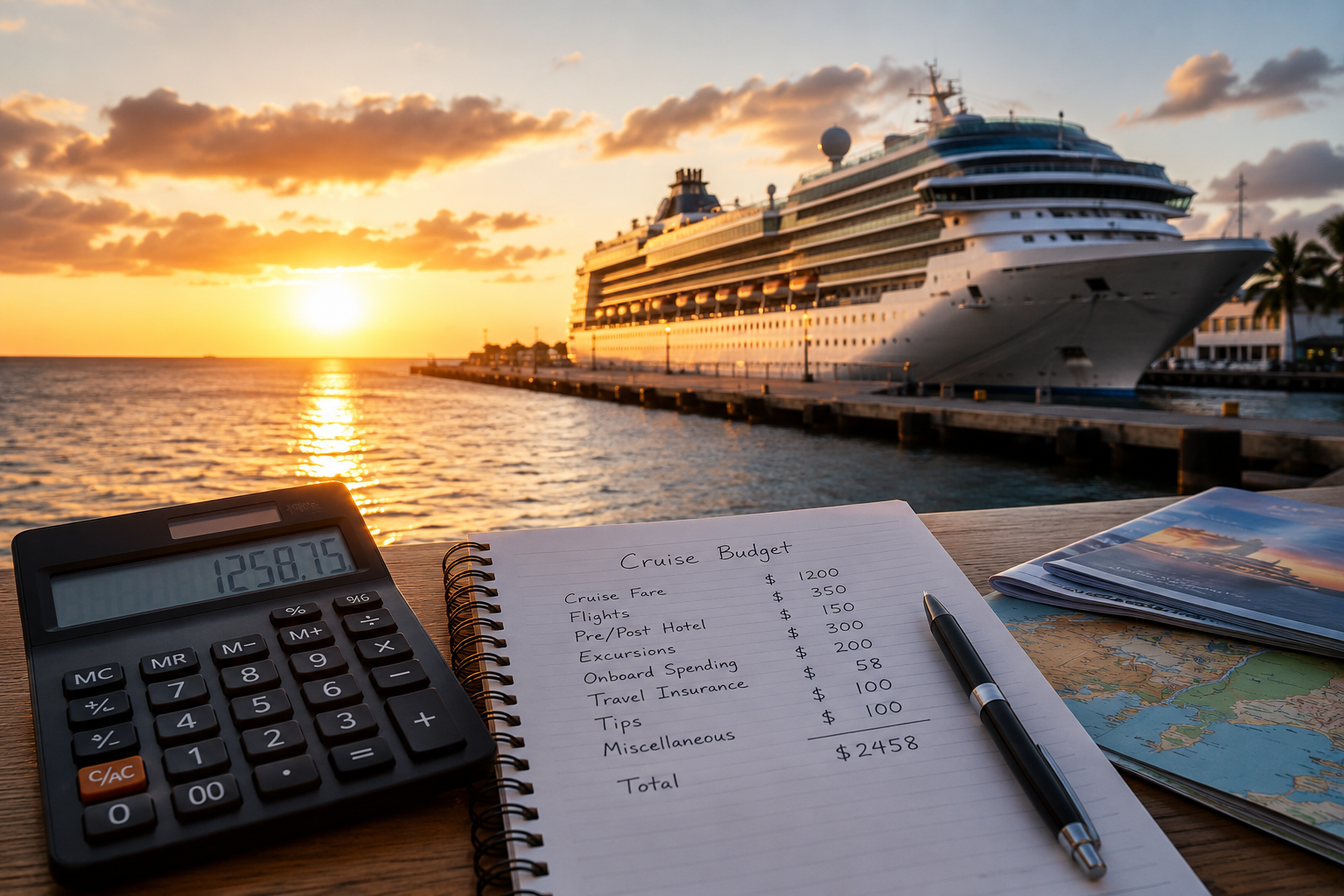
Two decisions do almost all the work: when you book and what you decline onboard. Booking during a real sale — the early-year "wave season" or a line's promotional push — gets you the lowest fare plus perks like onboard credit. Then, aboard, skipping the extras you won't fully use protects you from the markups where cruise lines actually make their money.
Everything else on this page is real, but it's small change next to those two. This guide — part of our New to Cruising guide — ranks the savings levers by how much they actually matter, then flags the "savings" that backfire.
The savings levers, ranked by payoff
Not all money-saving advice is equal. Some moves can shave hundreds off a trip; others save a few dollars and cost you an afternoon of fiddling. Here's how the common levers actually stack up, biggest payoff first.
| Savings lever | Payoffhow much it moves | Effort | The catch |
|---|---|---|---|
| Book during a real sale | Big | Low | Means planning ahead, not booking on impulse. |
| Travel in shoulder season | Big | Low | You need flexible dates and to avoid school breaks. |
| Decline the packages you won't use | Big | Low | Requires honesty about your real daily habits. |
| Sail from a drive-to port | Medium | Low | Only helps if a nearby port sails where you want. |
| Book excursions independently | Medium | Medium | You give up the ship's back-on-time guarantee. |
| Re-fare after a price drop | Medium | Medium | You have to watch prices and ask before final payment. |
| Pick an inside cabin | Medium | Low | No natural light; matters more on port-light sailings. |
| Skip the casino, spa, and photos | Small–Big | Low | Entirely down to your own willpower onboard. |
| Bring your allowed wine / soda | Small | Low | Strict limits; some lines (e.g., NCL) ban all non-alcoholic carry-ons. |
"Payoff" is relative to a typical first-timer's trip — the casino line spans small to big because it depends entirely on you. The rest of this guide takes the levers in order.
Before you book: where the biggest savings hide
The cheapest fare you'll ever see for a sailing is decided before you've packed a single bag. Three booking habits matter more than every onboard trick combined.
Book when the lines are actually competing
Cruise lines run their most aggressive promotions in the early-year stretch the industry calls wave season — roughly January through March — when they compete hardest with bundled perks like onboard credit, free upgrades, and dining packages. However, late-November sales (Black Friday and Cyber Monday) now frequently offer the lowest raw base fares. Outside of these major windows, sales still pop up throughout the year, so the rule is simple: book against a promotion, not against a deadline. If you're staring at a full-price fare with no perks attached, it's usually worth waiting for the next sale.
Use a refundable deposit and chase price drops
Booking early locks in the best cabins and, on popular sailings, the lowest fare — but the real trick is what comes after. Many lines will re-fare you to a lower price if the same cabin drops before your final payment date, often as future cruise credit or a straight fare reduction. Book on a refundable deposit where you can, keep an eye on the price, and ask your travel agent or the line to match any drop. While many lines allow you to re-fare a non-refundable deposit before final payment, they typically deduct a change fee (often $100 per person) that eats directly into your savings.
Be flexible on dates and itinerary
The single most expensive variable is when you sail. Holiday weeks, spring break, and peak summer carry a premium; the shoulder-season weeks on either side of them are reliably cheaper for a near-identical trip. The same flexibility applies to the route — repositioning cruises (one-way sailings when ships move between regions each season) and less-hyped itineraries often cost dramatically less per night than the headline routes. If your dates are firm, this lever is closed to you; if they're loose, it's one of the biggest.
Sail from a port you can drive to
This one hides off the cruise invoice entirely. A departure port within driving distance wipes out airfare, a pre-cruise hotel night, and the genuine risk of a delayed flight making you miss the ship. If two itineraries appeal equally, the one leaving from a nearby port is often hundreds of dollars cheaper once you count the travel. Our guide on how much a cruise really costs breaks down where that money actually goes.
Onboard: stop the small leaks
The fare gets you aboard. From the moment you step on, the ship is designed — thoughtfully and relentlessly — to sell you everything else. Onboard extras can add 30 to 50 percent on top of the cruise fare, so deciding in advance what you'll say yes to is the whole game.
Buy packages only if the math actually works
Drink, Wi-Fi, and specialty-dining packages are priced so the line wins on the average guest. A drink package only pays off if you'll genuinely drink your way past the break-even point — and remember an automatic gratuity of roughly 18 to 20 percent is added on top of the advertised rate. Run the numbers against your honest daily habit before you buy; our drink package break-even guide does the math for you. The same "only if you'll use it" test applies to specialty dining and to cruise Wi-Fi, where an eSIM used in port is often far cheaper than an at-sea plan.
Book your own shore excursions
Cruise-line tours are convenient but marked up; the same excursion booked independently often costs noticeably less. You do trade away the ship's own back-on-time guarantee, though reputable third-party aggregators explicitly offer their own guarantees to cover transport to the next port if their tour delay causes you to miss the ship. Our shore excursion comparison walks through exactly when to book independent and when the line's guarantee is worth paying for.
Pick a cabin that matches the trip
An inside cabin usually costs noticeably less than a balcony, though automated pricing means unassigned "guarantee" balconies can occasionally price lower than highly-demanded midship inside rooms. On a port-heavy itinerary where you're barely in the cabin, it's often the smartest spend — the savings can fund a whole excursion. On a sea-day-heavy sailing where you'll actually live in the cabin, a balcony earns its keep. Match the cabin to how much time you'll spend in it, not to what sounds nicer.
Resist the high-margin temptations
The casino, the spa, the art auctions, the professional photos, and the duty-free shops are pure profit centers. None of them are scams — but none are bargains either. This is also where non-refundable onboard credit (OBC) traps guests: because it operates on a "use it or lose it" basis, passengers often overspend here on the final night just to zero out their ledger. Set a hard limit before you sail. Most first-timers' "the bill was so much more than I expected" stories trace back here.
For every onboard extra, ask one question before you tap your card: would I pay this exact price for this exact thing on dry land? If the answer's no, the only reason you're tempted is that you're on holiday and the ship made it easy. That single filter saves more than any coupon.
False economies: "savings" that cost you more
Some popular money-saving moves are traps. They feel frugal in the moment and bite later.
- Removing your gratuities. The daily auto-gratuity is pooled among the cabin stewards, dining crew, and behind-the-scenes staff who are paid modestly and depend on it. Trimming it saves you a few dollars a day while pushing the cost onto the people serving you — budget for it as a fixed line item instead.
- Skipping travel insurance to save a little. A medical evacuation at sea can run into five or six figures, and standard health plans rarely cover it abroad. Going bare to save a modest premium is the textbook penny-wise, pound-foolish move — our cruise travel insurance guide lays out when it genuinely matters.
- Booking the cheapest cabin when it'll ruin the trip. The lowest guarantee fare is a great deal — unless you're prone to seasickness and end up assigned a high, far-forward cabin where motion is worst. Sometimes paying a little more for the right location is the actual saving.
- Cutting the airfare buffer too thin. Flying in the morning of departure to save a hotel night is the classic false economy: one delayed flight and you've missed the ship, with no refund. The day-before hotel is cheap insurance.
Where to focus your energy
If you do nothing else, concentrate on the left-hand column. The right-hand list is fine to skip — the savings rarely justify the hassle.
Worth the effort
Focus here…
- Booking against a real sale, on a refundable deposit.
- Choosing flexible, shoulder-season dates.
- Declining packages you won't fully use.
- Sailing from a port you can drive to.
- Doing the math on each big onboard extra.
Not worth the hassle
Don't sweat…
- Smuggling drinks past the per-line limits.
- Chasing tiny per-item coupons and promos.
- Removing gratuities to save a few dollars.
- Skipping insurance to shave the premium.
- Any "hack" that risks missing the ship.
"Our honest take: the cheapest cruise isn't the one with the most coupons — it's the one you booked on sale and then refused to upsell yourself on once aboard. Save big at the two ends, and stop fretting the pennies in the middle."
The biggest savings always start with knowing what you're actually paying for, so pair this with our breakdown of how much a cruise costs. From there, the decisions that move the most money are the package math in our drink package guide and when to book your cruise — booking when the lines are competing is the number-one lever of all. If any term here is unfamiliar, the cruise glossary explains the jargon in plain English.
Frequently asked questions
What is the best way to save money on a cruise?
Two decisions do most of the work: when you book and what you decline onboard. Booking during the early-year promotional stretch (roughly January through March) or whenever a line runs a real sale gets you the lowest fare plus perks like onboard credit; then, once aboard, skipping the extras you won't fully use — a drink package you can't drink your way through, ship-run tours you could do independently, the casino, the spa, the photo packages — protects you from the markups where cruise lines actually make their money. Almost every other tip is small change next to those two.
When is the cheapest time to book a cruise?
The early-year booking window — often called wave season, roughly January through March — is when cruise lines compete hardest with their best combination of low fares, onboard credit, and cabin choice. Outside of that, the cheapest fares tend to appear either very early (the moment a sailing opens, for popular or limited itineraries) or occasionally very late (last-minute deals on cabins a line still needs to fill). Shoulder-season sailings — just before or after peak weeks — are reliably cheaper than holidays and school breaks.
Is it cheaper to book a cruise early or last minute?
It depends on the sailing. Booking early secures the lowest published fare and the best cabin selection on popular or limited-departure cruises (think summer Alaska or holiday weeks), and many lines will re-fare you down if the price later drops. Last-minute deals exist too, but they're a gamble — you take whatever cabins are left, and on in-demand itineraries the price often rises, not falls, as the ship fills. If you book early on a refundable deposit and watch for price drops, you get the upside of both.
Should I buy the drink package to save money?
Only if you'll genuinely drink enough to clear the break-even point. Packages are priced so the line wins on the average guest, and an automatic gratuity of roughly 18 to 20 percent is added on top of the advertised rate. If you drink several cocktails plus coffees and sodas every day, a package can save money and remove bill anxiety; if you have a glass of wine with dinner and little else, paying as you go is almost always cheaper. Our drink package break-even guide does the math against your honest daily habit.
Can I remove cruise gratuities to save money?
You usually can ask to have the daily auto-gratuity removed, but it's the wrong place to cut. Those charges are pooled and distributed to the cabin stewards, dining staff, and behind-the-scenes crew who are paid modestly and rely on them as part of their wage — not extra profit for the cruise line. Trimming a few dollars a day here saves very little while pushing the cost onto the people serving you. Budget for gratuities as a fixed, non-negotiable line item and find your savings elsewhere.
What is the biggest hidden cost on a cruise?
For most first-timers it's the pile of onboard extras the fare doesn't cover — drinks, specialty dining, shore excursions, the spa, the casino, Wi-Fi, photos, and gratuities can together add 30 to 50 percent on top of the cruise fare. The fare gets you aboard; the ship is then designed to sell you everything else. Knowing that going in, and deciding in advance which extras are actually worth it to you, is the single biggest defense against a shock final bill — see our full guide to how much a cruise costs.