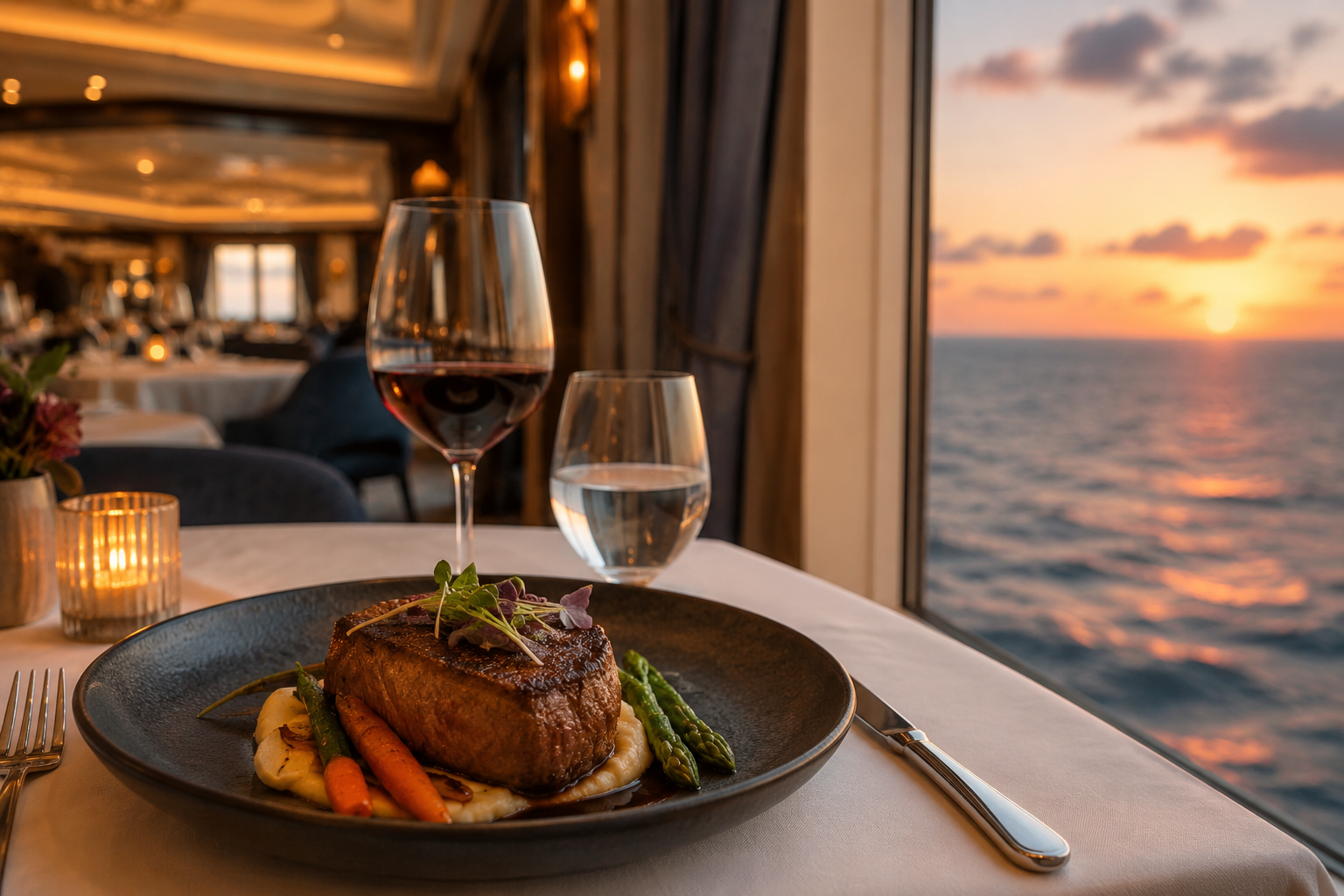
For a special night out, usually yes; as an everyday upgrade, usually no. Your main dining room and buffet are already included in your fare and the food is generally good — so specialty dining is an upgrade, not a fix for bad food.
The best value is the steakhouse or a hibachi/teppanyaki dinner, where the jump over what's included is obvious. Italian venues overlap most with the food you already get, and ultra-premium chef's restaurants are a true splurge — worth it only if the meal itself is the occasion. This guide — part of our New to Cruising guide — ranks them by value and shows how to pay less.
What specialty dining is — and how it's priced
Specialty restaurants are the extra-charge venues that sit alongside the included dining. You're not paying because the free food is bad; you're paying for better ingredients, a quieter room, sharper service, and a sense of occasion. There are two pricing models, and the difference matters:
- Flat cover charge. One per-person price for the whole meal — most dinners land around $30–$75, with steakhouses commonly $45–$75 and casual spots as low as $15. Ultra-premium and celebrity-chef rooms can run $100–$125+.
- À la carte. You pay per dish. Fine for a single item, but it adds up fast if the table orders freely.
Two things to remember on price: an automatic gratuity of around 18% is typically added on top of the cover charge, and lunch is often cheaper than dinner for a very similar menu (though sometimes slightly pared down) — one of the easiest ways to try a venue for less.
Specialty restaurants, ranked by value
Not all add-ons are created equal. Here's how the common types stack up on what you get for the cover charge — the synthesis the brochures won't give you.
| Restaurant type | Typical price (pp) | What you're paying for | Our verdict |
|---|---|---|---|
| SteakhouseChops Grille, Cagney's, Fahrenheit 555 | ~$45–$75 flat | Premium cuts and sides that clearly beat the included menu — the most obvious upgrade. | Best value |
| Hibachi / TeppanyakiBenihana-style, Bonsai, Teppanyaki | ~$40–$60 flat | Dinner plus a cook-at-the-table show — great fun for groups and families. | Best value |
| French / fine diningLe Bistro and similar | ~$30–$55 flat | A genuine special-occasion dinner with refined service and a quiet room. | Splurge for a night |
| Sushi / AsianIzumi and similar | À la carte (varies) | Fresh sushi the main dining room rarely matches — but the bill grows per plate. | Situational |
| Italian / trattoriaGiovanni's, Jamie's, La Cucina | ~$20–$45 flat | Pleasant, but the closest to what the main dining room and buffet already do well. | Easiest to skip |
| Celebrity-chef / ultra-premiumchef's table, wine-paired, signature rooms | ~$75–$125+ | A multi-course event meal, sometimes with a sommelier and pairings. | Splurge |
Restaurant names are examples of each type across major lines; prices are typical ranges that vary by line, ship, and night, and have been trending upward — treat them as ballpark, not quotes. Add ~18% gratuity to every figure.
When it's worth it — and when to skip
The decision is really about the occasion, not the food quality. Here's the honest split.
- You're marking an occasion — anniversary, birthday, a celebration night.
- You want one standout steak or hibachi dinner, not every night.
- You're on a longer sailing and want to break up the routine.
- You can bo
- You can book lunch or a first-night deal and pay less for the same (or very similar) food. ok lunch or a first-night deal and pay less for the same food.
- You're happy with the main dining room and buffet (most first-timers are).
- You're watching the budget — the cover charges and 18% add up.
- The venue is Italian or something the included dining already covers well.
- You'd be booking it out of FOMO rather than for a meal you actually want.
How to do it for less
If you do want a specialty night, a few moves cut the cost without cutting the experience:
- Book lunch instead of dinner. Often the same kitchen and a similar menu for a lower charge, though sometimes with slightly fewer options than dinner.
- Watch for first-night and embarkation-day deals. Lines frequently discount the first evening to fill tables.
- Only buy a package if the math works. Multi-meal bundles can save anywhere from 20% to 40%, but only pay off if you'd genuinely eat that many specialty dinners — otherwise a single à la carte night is cheaper.
- Mind the dress code. Some specialty rooms lean smart-casual or up; our cruise dress code guide keeps you from overpacking or getting turned away.
Specialty dining is one line in a much bigger food-and-budget picture. For where it fits, see what's included on a cruise and the included-vs-extra trade-offs in main dining room vs buffet; for trimming the whole bill, how to save money on a cruise. And the cruise glossary defines any term that trips you up, including specialty dining itself.
"If you book one specialty meal all week, make it the steakhouse. It's the clearest upgrade for the money — and you'll never wonder whether the buffet could have done the same thing."
Frequently asked questions
Is cruise specialty dining worth it?
For a special night out, usually yes — but as an everyday upgrade, usually no. Your main dining room and buffet are already included and generally good, so specialty dining is an upgrade, not a fix. The best value tends to be the steakhouse or a hibachi/teppanyaki dinner, where the experience is clearly a step above what's included. Ultra-premium and celebrity-chef restaurants are a splurge worth it only if the meal itself is the occasion.
How much does cruise specialty dining cost?
Most specialty dinners run a flat cover charge of about $30 to $75 per person, with steakhouses commonly around $45 to $75 and casual spots as low as $15. Ultra-premium and celebrity-chef restaurants can run $100 to $125 or more. An automatic gratuity of around 18% is typically added on top, and some venues price à la carte instead of a flat fee, so the bill can climb with each dish.
Is the main dining room food worse than specialty dining?
Not really — that's a common misconception. The main dining room (MDR) is included in your fare and the food is generally good, with a multi-course menu that changes nightly. Specialty restaurants offer better cuts, a quieter room, more attentive service, and a sense of occasion, but you're paying for the upgrade and the atmosphere more than fixing bad food. Many first-timers are perfectly happy never leaving the MDR and buffet.
Is a specialty dining package worth it?
A package can pay off if you already know you want multiple specialty nights — bundles of three, five, or seven meals are commonly priced to save anywhere from 20% to 40% versus booking each à la carte. But if you only want one special dinner, a package is more than you need. Buy a package only when the per-meal price beats paying for the individual dinners you'd actually book.
Do you tip on top of the specialty dining charge?
Usually the gratuity is already included: most lines add an automatic service charge of around 18% to the specialty dining cover charge, so you don't need to tip again unless you want to reward exceptional service. Always check your receipt — the gratuity line is typically itemized so you can see it's already been applied.
What is the best specialty restaurant on a cruise?
For value, the steakhouse is the most reliable pick — it delivers the clearest upgrade over the included dining for a moderate cover charge. Hibachi/teppanyaki is the best choice for groups and families who want dinner plus a show. Italian venues are pleasant but overlap most with what the main dining room already does well, so they're the easiest to skip. The right answer depends on the occasion, but a steakhouse dinner is the safest single splurge.