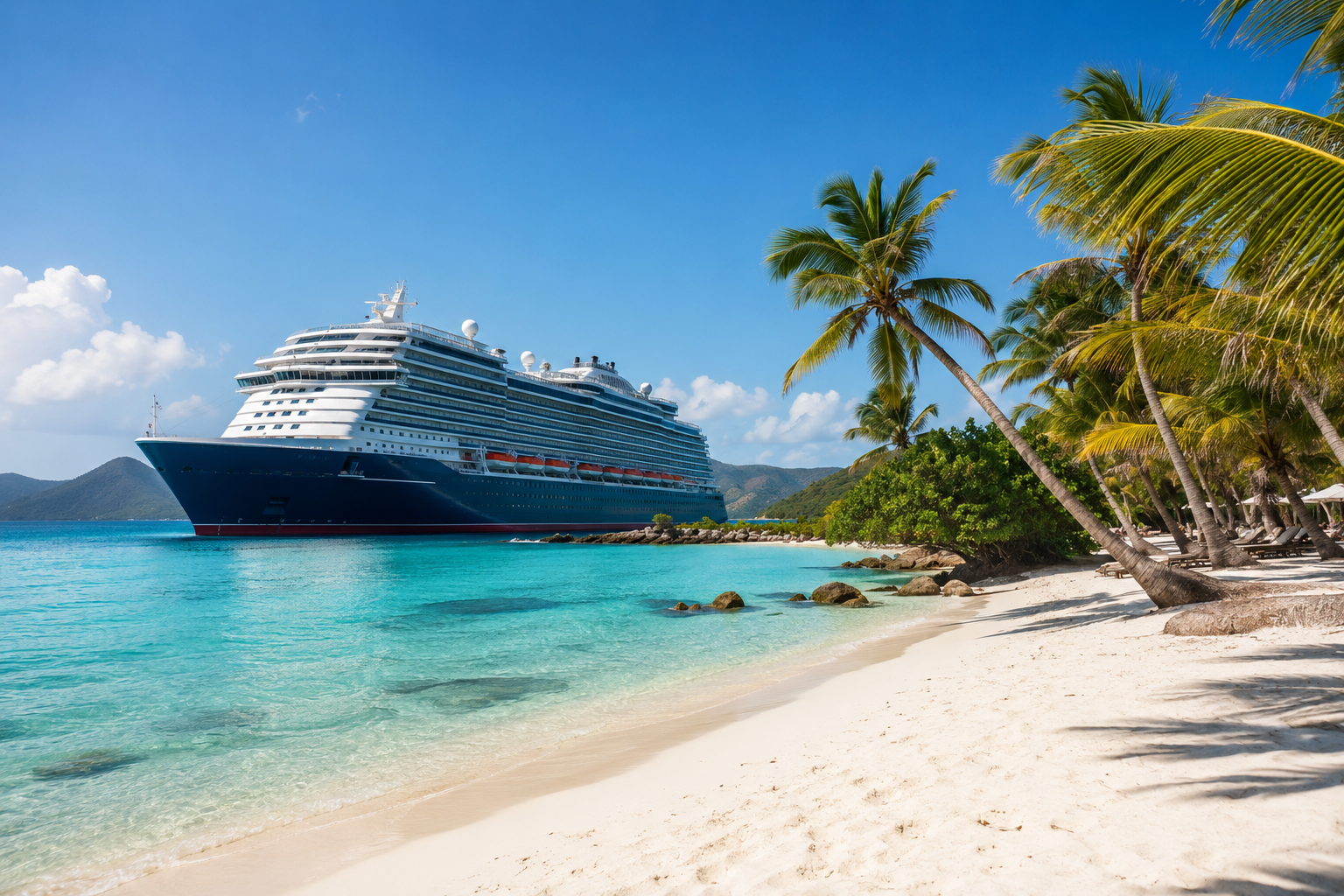
Choose by what you want from your days in port. The eastern Caribbean is the beach-and-shopping route — postcard sand, turquoise water, and duty-free stores on islands like St. Thomas, St. Maarten, San Juan, and the Bahamas. The western Caribbean is the adventure-and-culture route — Mayan ruins, world-class snorkeling, cave tubing, and ziplines at ports like Cozumel, Grand Cayman, Roatan, Belize, and Jamaica.
Both are warm year-round, both mostly sail from Florida, and the ship experience is the same either way — so this isn't about easy versus hard. It's about whether you want to switch off on a beach or stay busy seeing things. This guide — part of our New to Cruising guide — lays out the real differences and gives you a simple way to decide.
Eastern vs western Caribbean, at a glance
The weather and the onboard experience barely change between the two — the difference is entirely in where the ship stops and what there is to do once you step off.
| Eastern Caribbeanbeaches & shopping | Western Caribbeanadventure & culture | |
|---|---|---|
| Typical ports | St. Thomas, St. Maarten, San Juan, the Bahamas | Cozumel, Grand Cayman, Roatan, Belize, Jamaica |
| The vibe | Relaxed beach days | More to see and do |
| Signature excursions | Beach days, snorkeling, catamaran sails | Mayan ruins, diving, cave tubing, ziplines |
| Beaches | Some of the Caribbean's best | Good, but activities are the draw |
| Shopping | Strong (duty-free St. Thomas / St. Maarten) | More local markets, less duty-free |
| Sea days | Often a bit more time at sea | Ports closer together, busier days |
| Departure ports | Mostly Florida (also San Juan) | Florida plus Gulf ports (Galveston, New Orleans, Tampa) |
| Weather | Warm year-round | Warm year-round |
| Best as a… | Relax-and-unwind beach trip | See-something, do-something trip |
Generalizations, not guarantees — individual itineraries mix and match ports. But this is the pattern that holds most of the time.
When the eastern Caribbean wins
If your ideal port day is a beach chair, warm water, and not much of a plan, the eastern Caribbean was built for you.
- The beaches are the headline. St. Thomas, St. Maarten, and the cruise lines' private islands deliver the classic powder-sand, turquoise-water scenes most people picture when they think "Caribbean." You can have a perfect day doing almost nothing.
- You like to shop. The eastern islands are famous for duty-free shopping — jewelry, watches, liquor, and perfume in St. Thomas and St. Maarten especially. It's a genuine draw, not an afterthought.
- You want easy, low-effort port days. Many eastern stops let you walk or take a short taxi to a great beach, so you don't have to book and budget for big excursions to have a wonderful time.
- You enjoy a relaxed pace. Eastern itineraries often include a touch more time at sea, which means more pool, more lounging, and a slower rhythm overall.
The trade-off: if you get restless lying around, the eastern Caribbean can feel same-y after a few stops — beautiful beach, then another beautiful beach. The scenery is gorgeous but the days can blur together if relaxing isn't your thing.
When the western Caribbean wins
If you'd be bored doing nothing and want your vacation to come home with stories, the western Caribbean gives you far more to sink your teeth into.
- There's real history and culture. Western ports put you within reach of Mayan ruins — Tulum and Chichen Itza from Cozumel, Chacchoben from Costa Maya, Altun Ha from Belize — which is something no eastern beach can match.
- The water activities are world-class. Cozumel's reefs, Grand Cayman's Stingray City, and Belize's barrier reef are among the best snorkeling and diving in the hemisphere.
- The excursions are adventurous. Cave tubing in Belize, ziplines and river tubing in Jamaica and Honduras, and jungle hikes give active travelers a packed, memorable day ashore.
- Ports are close together. The western loop tends to pack in port days with shorter hops between stops, so there's less time at sea and more time exploring — exactly what busy travelers want.
The trade-off: western days tend to require booking an excursion to get the most out of them, which adds cost and planning, and the beaches — while good — aren't quite the flawless eastern postcards. This is a region that rewards travelers who want to do, not just sunbathe. Since the real difference between the regions is what happens in port, our shore excursion comparison is the natural next read.
A simple way to decide
Forget which region is objectively "better" — they're aimed at two different kinds of traveler. Find the column that sounds most like you.
Lean Eastern
Choose the eastern Caribbean if…
- Your perfect day is a beach, warm water, and a book.
- You enjoy duty-free shopping in port.
- You'd rather not book and budget big excursions.
- You like a relaxed pace with a little more time at sea.
Lean Western
Choose the western Caribbean if…
- You'd get restless with nothing but beach days.
- Ruins, reefs, and adventure excite you.
- You want packed port days and less time at sea.
- You don't mind planning and paying for excursions.
"Our honest take: pick eastern if you want to switch off on a beach, western if you'd be bored doing nothing. Eastern is the better 'vacation'; western is the better 'trip.'"
One more thing worth knowing: there's a third option, the southern Caribbean — Aruba, Bonaire, Curacao, Barbados, and St. Lucia — which sits outside the main hurricane belt and feels more far-flung, but usually means longer sailings, often from San Juan, at a higher price. It's a great second or third Caribbean cruise once you know you love the region. And if you're still deciding between the Caribbean and somewhere cooler entirely, that's a level up the chain — see our Caribbean vs Alaska comparison. For the full framework on matching any destination to your travel style, our guide on how to choose a cruise itinerary ties it all together.
Whichever half you pick, the packing is largely the same warm-weather kit — swimwear, light clothes, reef-safe sunscreen, and good walking shoes for the western excursions — which we cover in the cruise packing list. And if any cruise jargon trips you up along the way, the cruise glossary explains it in plain English.
Frequently asked questions
What's the difference between an eastern and western Caribbean cruise?
It mostly comes down to what you do in port. Eastern Caribbean itineraries lean into classic beaches, turquoise water, and duty-free shopping, calling at islands like St. Thomas, St. Maarten, San Juan, and the Bahamas. Western Caribbean itineraries lean into adventure and culture — Mayan ruins, world-class snorkeling and diving, cave tubing, and ziplines — calling at ports like Cozumel, Grand Cayman, Roatan, Belize, and Jamaica. Both are warm year-round and most sail from Florida, so the weather and the ship experience are similar; the difference is the flavor of the days ashore.
Is the eastern or western Caribbean better?
Neither is better overall — they suit different travelers. The eastern Caribbean is the better choice if your idea of a perfect port day is a beach chair, warm water, and a little shopping. The western Caribbean is the better choice if you'd get restless doing nothing and want ruins, reefs, and jungle adventures. A useful shorthand: eastern is the better "vacation" and western is the better "trip."
Which has better beaches, the eastern or western Caribbean?
The eastern Caribbean generally edges it for pure postcard beaches — St. Thomas, St. Maarten, and the private islands deliver the classic powder-sand, turquoise-water scenes. The western Caribbean has plenty of good beaches too, especially around Cozumel, Grand Cayman, and Roatan, but the region's real draw is its activities — ancient ruins, snorkeling, and excursions — rather than the sand itself. If lying on a beautiful beach is the priority, lean eastern.
Which Caribbean cruise is best for a first cruise?
Both are excellent first cruises, so pick by personality rather than by which is "easier." If you want to switch off and relax, the eastern Caribbean's beach-and-shopping rhythm is hard to beat. If you and your group like to stay busy and see something memorable, the western Caribbean's mix of ruins, reefs, and adventure tends to win people over. Either way you get warm weather, easy Florida departures, and a forgiving introduction to cruising — and our roundup of the best cruises for first-timers helps you match it to the right line and ship.
What about the southern Caribbean — how is it different?
The southern Caribbean is a third option worth knowing about. It reaches further down to islands like Aruba, Bonaire, Curacao, Barbados, and St. Lucia, which sit outside the main hurricane belt and offer a more far-flung, less-crowded feel. The trade-off is that these itineraries are usually longer, often depart from San Juan rather than Florida, and tend to cost a bit more, so they're a slightly more advanced pick than a classic eastern or western run.
Does hurricane season affect the eastern or western Caribbean more?
Atlantic hurricane season runs roughly June through November, with the peak in late summer and early fall, and it can affect both regions. Cruise lines track storms closely and reroute ships well in advance, so the bigger practical risk is a changed itinerary rather than danger. If you're sailing during peak season, that flexibility is a point in cruising's favor — the ship simply sails the other direction. Travel insurance and a relaxed attitude about port swaps matter more than which half of the Caribbean you choose.