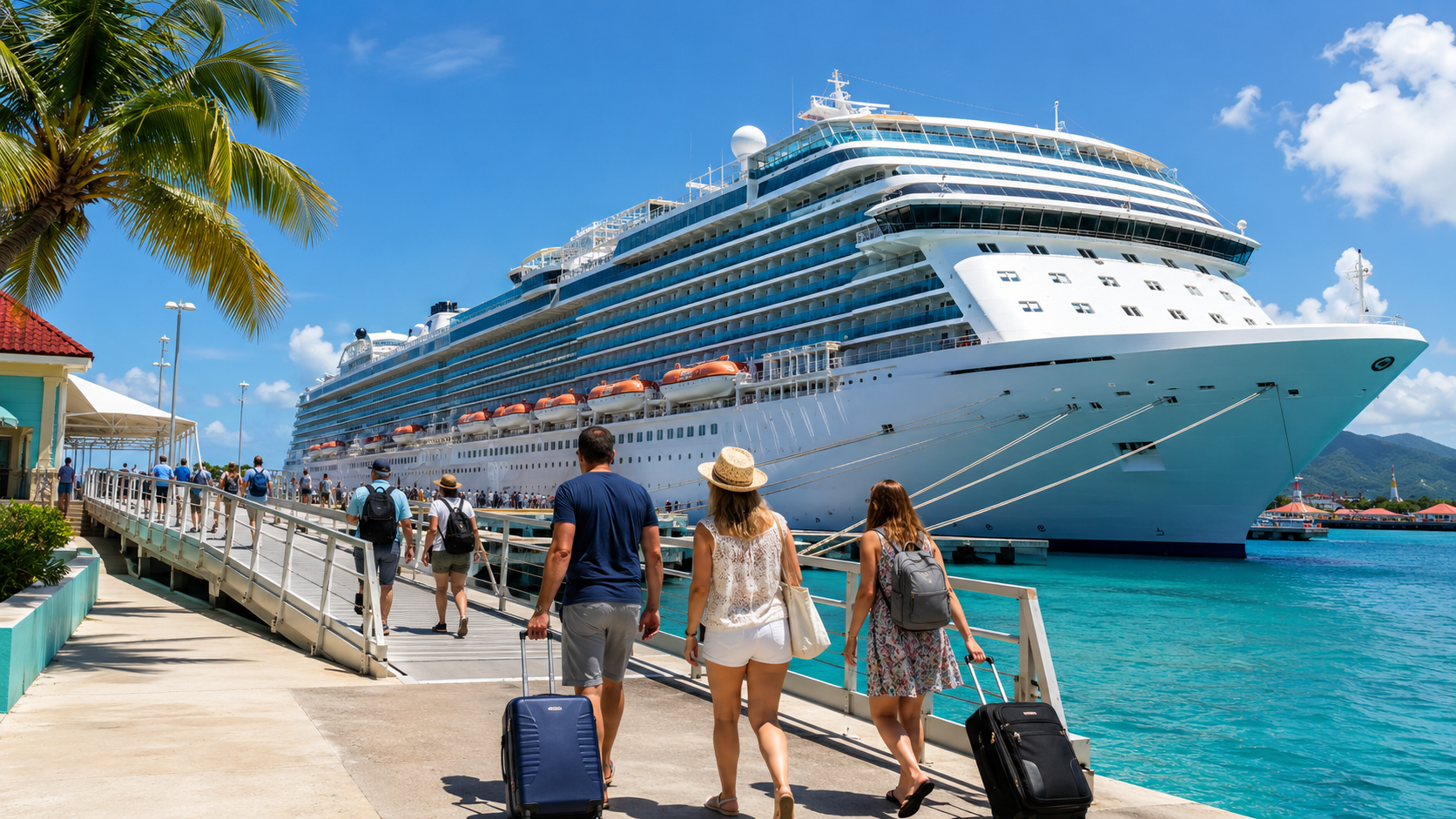
The safest first cruise for most people is a 3 to 5-night Caribbean or Bahamas sailing on a big mainstream line — Royal Caribbean, Princess, Celebrity, or Carnival. It's short enough to be low-risk if cruising isn't for you, the ships carry enough variety that sea days never drag, and the price is forgiving.
Choose the line by the vibe you want, not the brochure photos: Royal Caribbean and Carnival for energy, activity, and families; Princess and Celebrity for a calmer, more grown-up trip. This guide — part of our New to Cruising guide — walks through who each line really suits, then names the lines we'd steer a first-timer away from.
How we picked (and why "independent" matters here)
Search "best first cruise" and most of the top results are written by the cruise lines themselves or by sites that earn a commission steering you to one. They're not lying, exactly — they just have no incentive to tell you a line's weak spots. We do the opposite: every line below gets a real trade-off, because the line that's perfect for your neighbor might be exactly wrong for you.
Three things decide whether a line suits a first-timer: the onboard vibe (lively and packed, or calm and spread out), the true cost once extras are added, and how forgiving it is of rookie mistakes. We weighted those over flashy hardware. If you're still deciding whether to cruise at all, start one step back with is a cruise worth it.
The honest comparison, at a glance
Here's the table the brand sites won't build — the best-fit and the watch-out for each mainstream line, side by side. Skim it, then read the picks below for the detail. Each line name links to our full guide for that line, or you can browse every ship across all lines.
| Line | Best for | Watch out for | Overall vibe |
|---|---|---|---|
| Royal Caribbean | Best all-rounder. Families and anyone who wants maximum activity. | Newest mega-ships can feel like a crowded theme park; priced above Carnival. | Big, busy, high-energy |
| Carnival | Best value. Budget-minded first-timers and short samplers. | Party reputation on short/holiday sailings; older ships vary in quality. | Casual, fun, affordable |
| Princess | Best calm option. Couples and relaxed travelers who want destinations over water slides. | Fewer thrill activities; skews to an older crowd. | Relaxed, refined, classic |
| Celebrity | Best "premium-lite." Couples wanting a polished, adult feel without luxury prices. | Costs more than Carnival/Royal; less for kids. | Modern, upscale, grown-up |
| Norwegian (NCL) | Independent types who hate fixed dining times ("Freestyle" cruising). | Heavy upselling; à-la-carte model can nickel-and-dime first-timers. | Flexible, casual, à la carte |
| MSC | Value seekers comfortable with a more international, European style. | Service & communication get mixed reviews from US first-timers. | European, value-driven |
| Disney | Families with young kids who'll use the theming. | Price. Often the most expensive mainstream option by far. | Family-first, premium-priced |
Our picks for a first cruise
If the table tempted you, here's the reasoning behind each pick — what it does well, who it's wrong for, and the honest catch.
Royal Caribbean Best all-rounder
If you want one safe recommendation and you're not sure what you'll like, this is it. Royal's newer ships pack in so much — pools, water slides, rock walls, Broadway-caliber shows, a dozen places to eat — that there's genuinely something for every age and mood, which is exactly what a first-timer can't predict about themselves yet.
Carnival Best value
The most forgiving way to find out whether you even like cruising. Fares are the lowest of the mainstream lines, the mood is casual and fun, and a 3 to 4-night Bahamas hop is the textbook low-risk first cruise. Spend less, learn what you like, then level up next time if you want.
Princess Best for a calm trip
If the idea of water slides and a packed pool deck makes you tired rather than excited, Princess is your line. It's destination-focused, quietly comfortable, and the pace is slower — the cruise equivalent of a good hotel rather than a resort water park.
Celebrity Best premium-lite
The sweet spot between mainstream and luxury. Celebrity feels more polished and grown-up than Royal or Carnival — better design, calmer adult spaces, stronger food — without the eye-watering price of a true luxury line. A great first cruise for couples who want it to feel a notch above.
"The 'best' line isn't the one with the most water slides. It's the one whose normal Tuesday matches the vacation you actually pictured."
Two more worth knowing: Norwegian (NCL) if you hate being told when to eat — its "Freestyle" model lets you dine when and where you like, though the trade-off is constant upselling. And MSC if value is everything and you don't mind a more international, European-flavored experience — just go in knowing US first-timers give its service mixed reviews. The line you choose interlocks with three other calls: how long to sail, where to go, and which cabin to book. Once you've shortlisted a line, see choosing your cruise line for the mainstream-vs-premium-vs-luxury breakdown, 3-day vs 7-day for picking a trip length, Caribbean vs Alaska for choosing your first itinerary, and how to choose a cabin for picking the right room aboard it.
Which cruises to skip for your first one
This is the section the cruise lines will never write, and it's the most useful one here. None of the cruises below are bad. They're just the wrong first cruise — the ones where a beginner is most likely to overspend, get bored, or get seasick and conclude (wrongly) that they hate cruising. Test the format with an affordable big-ship sailing first, then graduate.
Ultra-luxury all-inclusive lines
Regent, Silversea, Seabourn and the like are wonderful — and a very expensive way to discover you'd actually have been just as happy on a mainstream ship. Spend a fraction of the money proving you love cruising before you commit to a luxury fare.
Small expedition ships
Antarctica and the Galápagos are bucket-list trips, but they involve long, often rough open-water crossings, few onboard distractions, and a big price tag. That's a lot to ask of a first cruise. Build your sea legs and confidence on a calm Caribbean sailing first.
River cruises (if you pictured a big ship)
River cruising is lovely, but it's a completely different product: small vessels, no pools or water slides, an older crowd, a slower rhythm. If the image in your head was a towering resort ship, a river cruise will feel like a mismatch. Make sure the format matches the daydream.
The longest, most port-heavy itineraries
A 14-night transatlantic or a back-to-back Mediterranean marathon sounds like great value per day — until a first-timer discovers mid-trip that they're cruise-weary with a week still to go. Start short. You can always book longer once you know your tolerance.
If seasickness is the specific worry steering these choices, it's very manageable — see our guide to preventing seasickness for cabin placement and remedies, and don't let it rule out cruising. And if a piece of cruise jargon trips you up while you compare lines, the cruise glossary defines the lingo in plain English.
Once you've picked a line
Choosing the line is step one. Before you book, it's worth knowing exactly what's included in the fare (and what isn't) so the price doesn't surprise you, and reading the first-time cruise mistakes to avoid — the booking, dining, and packing errors that catch nearly everyone once. Get those three things right and your first cruise starts on the right foot.
Frequently asked questions
What is the best cruise to go on for your first time?
For most first-timers, a 3 to 5-night Caribbean or Bahamas sailing on a big mainstream line — Royal Caribbean, Princess, Celebrity, or Carnival — is the safest first cruise. It's short enough to be low-risk if you discover cruising isn't for you, the ships have enough variety that sea days never feel empty, and the price is forgiving. Pick the line by the vibe you want: Royal Caribbean and Carnival for energy and activity, Princess and Celebrity for a calmer, more grown-up feel.
Is Royal Caribbean or Carnival better for first-time cruisers?
Both are excellent first cruises; the difference is tone and budget. Carnival is the better value and leans fun, casual, and party-friendly — great if you want a lively, affordable sampler. Royal Caribbean costs a bit more but its newer mega-ships have the widest range of activities, which makes it the stronger all-rounder for families and anyone who wants "something for everyone." If budget is the priority, choose Carnival; if onboard wow-factor is, choose Royal.
What is the 3-1-1 rule on cruises?
The 3-1-1 rule is actually a TSA airport rule, not a cruise rule — it applies to the flight you take to reach your port. Liquids in your carry-on must be in containers of 3.4 ounces (100 ml) or less, all fitting in one quart-sized bag, one bag per passenger. Cruise lines have their own separate policies: most let you bring a limited amount of wine aboard but prohibit hard liquor. Always check your specific line's beverage policy before packing.
Are cruises suitable for people with motion sickness?
Yes — modern cruise ships are very stable, with stabilizers that dramatically reduce motion, and most people who worry about seasickness never feel it. If you're prone to it, choose a large ship on a calm-water itinerary like the Caribbean, book a midship cabin on a lower deck where movement is least, and bring remedies as backup. Our seasickness guide covers prevention in detail.
What cruises should a first-timer stay away from?
For a first cruise, steer clear of ultra-luxury all-inclusive lines (expensive for a trip you might not enjoy), small expedition ships (long, rough crossings to remote places), and river cruises if what you actually pictured was a big resort ship with pools and shows. These aren't bad cruises — they're simply the wrong first cruise. Test the format with an affordable big-ship sailing first, then graduate to a specialized experience once you know you love it.