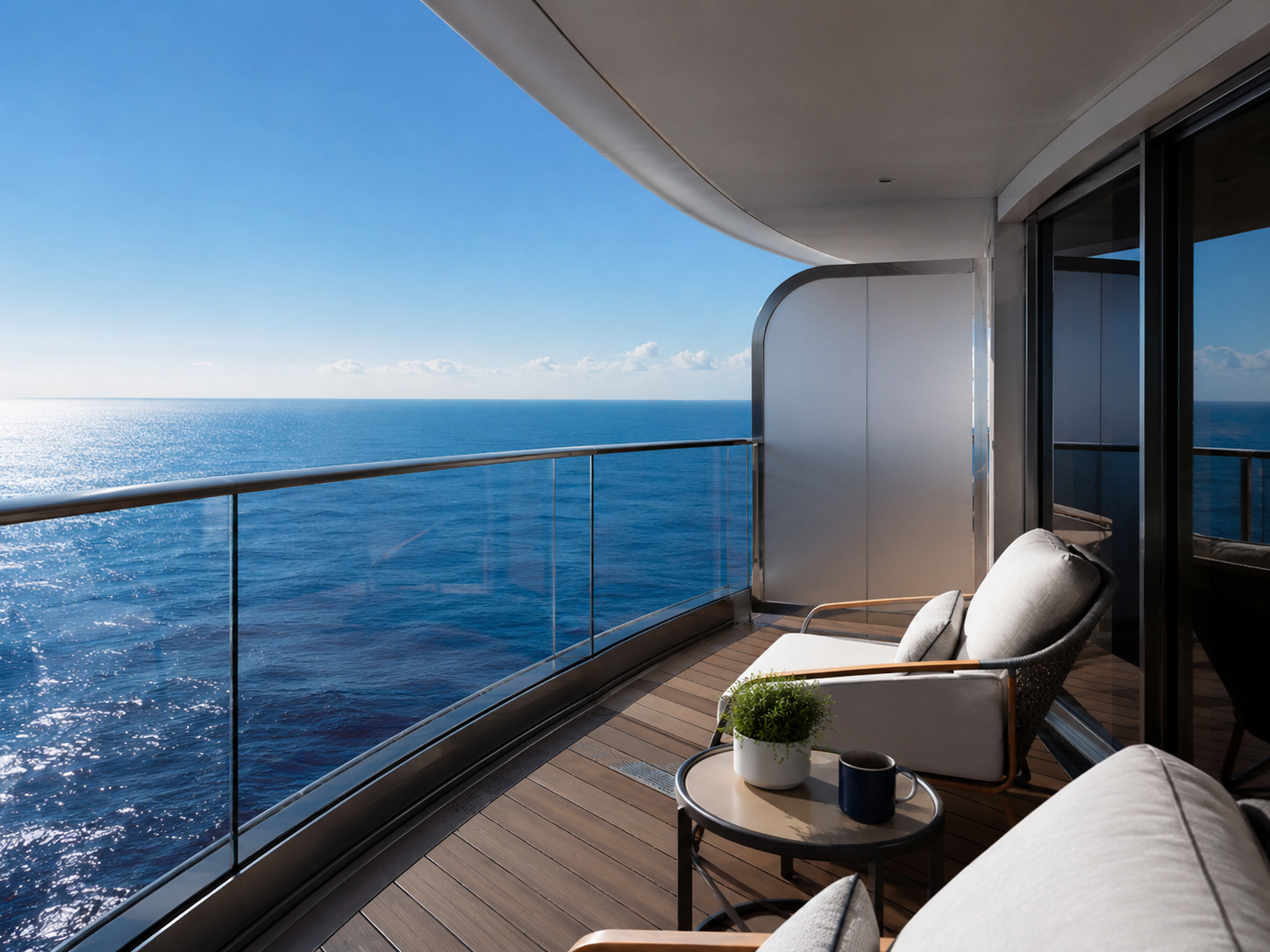
Most cruisers never get seriously seasick. A modern cruise ship is enormous — tens of thousands of tons riding low and wide in the water — and its stabilizers (retractable fins below the waterline) cancel most of the side-to-side roll before you ever feel it. On a calm-water itinerary like the Caribbean, many first-timers say they couldn't tell the ship was moving at all.
That said, "rare" isn't "never." If you're prone to motion sickness, the right cabin and a remedy in your bag turn the odds firmly in your favor. This guide — part of our New to Cruising guide — covers how likely it really is, which remedies actually work, and where to book your cabin so you feel the least motion.
How likely is it that you'll actually get seasick?
Far less likely than the worry suggests. Seasickness is a form of motion sickness: it happens when your inner ear senses movement that your eyes don't, and your brain gets conflicting signals. On a big cruise ship in normal conditions, the motion is so gentle and slow that most people's brains adjust within a day — a process old sailors call "getting your sea legs." Surveys and cruise-line estimates consistently put the share of passengers who feel genuinely unwell in the low single digits to maybe one in ten, and most of those cases are mild and brief.
What pushes the odds up or down is fairly predictable. You're more likely to feel it if:
- You already get carsick, airsick, or queasy on boats and fairground rides — past motion sickness is the single best predictor.
- Your itinerary crosses open, exposed water — a transatlantic crossing, the Drake Passage to Antarctica, or the open Pacific — rather than sheltered seas like the Caribbean or the Mediterranean in summer.
- You're sailing in rougher seasons, such as the Atlantic during hurricane months or Alaska's shoulder weeks.
- You're on a smaller ship, which rides the swells more than a large one.
And you're less likely to feel it on a large, modern ship with stabilizers, on a calm-water route, in a well-placed cabin — all things you can choose in advance. If any cruise terminology here is new, our cruise glossary explains the lingo in plain English.
Seasickness remedies, compared
If you want a safety net, pack one. Remedies fall into two camps: medications that work by calming the inner ear (more effective, but most cause some drowsiness) and drug-free options (no side effects, better for mild cases or as a supplement). Here's how the common ones stack up:
| Remedy | Type | How & when to use | Best for / watch-outs |
|---|---|---|---|
| Meclizine (Bonine, Dramamine Less Drowsy) |
OTC pill | One tablet daily; take the night before or at least an hour before sailing, before symptoms start. | Less sedating than regular Dramamine — the everyday go-to. Still causes some drowsiness in some people. |
| Dimenhydrinate (Dramamine, original) |
OTC pill | Every 4–6 hours as needed; works quickly, so it's a useful rescue once you feel queasy. | More sedating — good for a nap day, less ideal if you want to stay sharp on a port stop. |
| Scopolamine patch (Transderm Scōp, Rx) |
Prescription patch | Stick behind the ear ~the night before; one patch lasts up to 3 days. | The most effective option for multi-day or rough sailings. Needs a doctor; side effects include dry mouth, blurred vision, rarely confusion. Wash hands after handling. |
| Ginger (capsules, chews, candy) |
Drug-free | Take before and during sailing; reach for it at the first hint of queasiness. | No drowsiness or cognitive effect. Best for mild cases or alongside other remedies; evidence is modest but real. |
| Acupressure bands (Sea-Band) |
Drug-free | Wear on both wrists, button pressed on the pressure point; put them on before you sail. | Zero side effects, reusable, kid-friendly. Results vary person to person; gentle insurance rather than a guaranteed fix. |
General information, not medical advice. Check with your doctor or pharmacist before starting any medication — especially the scopolamine patch, or if you take other prescriptions, are pregnant, or are dosing a child.
The pattern across all of them is the same: start before you feel sick, not after. Every remedy works far better as prevention than as a cure once nausea has set in. If you'd rather pack ahead, a small kit — meclizine, ginger chews, and a set of acupressure bands — is exactly the kind of thing we flag in our cruise seasickness gear picks, and it earns its spot in any first-timer's bag.
The single best move: choose the right cabin
If you only do one thing about seasickness, do this one. Where your cabin sits on the ship changes how much motion you feel more than any pill — and it costs nothing extra to book wisely. Picking the right cabin is the #1 mitigation, and it's worth understanding before you book; our cruise cabin comparison walks through the full trade-offs of inside, oceanview, balcony, and suite.
- Midship — the center of the ship is its pivot point, so it moves least. This matters most.
- A lower deck, closer to the waterline, where the rocking is gentler than up high.
- A balcony or oceanview, so you can see the horizon — a steady visual reference settles the inner-ear conflict.
- A large ship with stabilizers on a calm itinerary like the Caribbean.
- Forward (bow) or aft (stern) — the ends of the ship rise and fall the most.
- High decks, which sway more the farther you are from the waterline.
- An interior cabin with no window — no horizon to anchor your eyes if you do feel queasy.
- A small ship on an open-ocean route, where swells move the whole vessel.
If avoiding seasickness is your top priority, that points to a midship, lower-deck oceanview or balcony on a big ship — and we've gathered those specific recommendations in our guide to the best cabin for seasickness. It's also worth choosing a large, stable ship with modern stabilizers over a smaller vessel if motion is a real concern for you; ship size genuinely changes the ride.
What to do onboard if you start to feel queasy
Say it happens anyway — a rougher patch of water, or you simply skipped the prep. The good news is that a few simple moves settle most early queasiness before it becomes real sickness:
- Find the horizon. Go outside, look at the steady line where sea meets sky, and let your eyes lock onto it. Giving your brain a fixed visual reference is the fastest natural fix.
- Get fresh air and stay midship. Move to an open deck near the center of the ship and breathe. Stuffy interior spaces make it worse.
- Eat light, and keep eating. An empty stomach is worse than a full one. Plain crackers, bread, green apples, and ginger ale are the classic settlers; skip greasy or heavy food and go easy on alcohol.
- Take a remedy now — and lie down if you need to. Fast-acting options like dimenhydrinate or ginger can still help once symptoms start. Resting flat with your eyes closed also reduces the sensory conflict.
- Use the ship's medical center if it lingers. Every cruise ship has a doctor and nurses onboard. If you're genuinely miserable, they can give you something stronger — often an injection that works quickly. Don't suffer through it.
Our honest take
Seasickness is the worry that keeps a lot of people from ever booking a cruise — and in our view, it shouldn't. The risk is real but small, and almost entirely manageable with choices you make before you board. If you've never been on a boat and you're anxious, here's what we'd actually do: book a large ship on a calm itinerary, pick a midship cabin on a lower deck, and pack meclizine plus ginger chews as insurance you'll probably never open.
"The thing most first-timers fear barely registers for the vast majority of cruisers. Choose your ship, cabin, and route well, keep a remedy in your bag, and seasickness goes from dealbreaker to footnote."
The one honest caveat: if you have a history of severe motion sickness, take it seriously rather than waving it off. Talk to your doctor about a scopolamine patch before you sail, lean hard on the cabin and itinerary advice above, and you'll still very likely have a wonderful trip.
Related worries worth sorting out
Seasickness often travels with a couple of other first-timer concerns. If the feeling of being closed in worries you as much as the motion, our take on cruise claustrophobia covers cabin choice and onboard space from that angle. And if your unease is really about the ship itself, it's worth reading whether cruise ships are safe — the short version is reassuring. For any term you bump into along the way, the cruise glossary has you covered.
Frequently asked questions
Will I get seasick on a cruise?
Probably not. Most cruise passengers never get seriously seasick. Large modern ships sit low and wide in the water and use stabilizer fins to cancel most of the roll, so on calm-water routes like the Caribbean many first-timers barely notice the ship is moving. You're more at risk if you already get carsick or airsick, if you're on a smaller ship, or if your itinerary crosses open, exposed water. Even then, the right cabin and a remedy in your bag bring the odds firmly in your favor.
What is the best cabin to avoid seasickness?
A cabin midship and on a lower deck, closer to the waterline. The center of the ship is its pivot point, so it moves the least, and lower decks sway less than high ones. An oceanview or balcony cabin also helps, because seeing the horizon gives your eyes a steady reference that settles the inner-ear conflict behind motion sickness. Avoid cabins far forward or aft and high up. For specific picks, see our guide to the best cabin for seasickness.
What is the best medicine for cruise seasickness?
For most people, over-the-counter meclizine (sold as Bonine or Dramamine Less Drowsy) is the everyday choice — it's effective and less sedating than original Dramamine, taken once a day starting before you sail. For multi-day or rougher sailings, the prescription scopolamine patch is the most effective option, lasting up to three days, though it requires a doctor and can cause dry mouth or blurred vision. Whatever you choose, take it before symptoms start. This is general information, not medical advice — check with your doctor or pharmacist first.
Do ginger and acupressure bands actually work?
They can help, especially for mild cases or as a supplement to medication. Ginger — in capsules, chews, or candy — has modest but real evidence behind it and, crucially, causes no drowsiness or cognitive effects. Acupressure bands like Sea-Band apply gentle pressure to a point on the wrist; results vary from person to person, but they have zero side effects, are reusable, and are safe for kids. Think of both as low-risk insurance rather than a guaranteed cure, and start using them before you feel sick.
How do I get rid of seasickness once it starts?
Go outside, find the horizon, and let your eyes lock onto that steady line while you breathe fresh air near the middle of the ship. Keep something light in your stomach — plain crackers, bread, green apples, ginger ale — since an empty stomach is worse. A fast-acting remedy like dimenhydrinate or ginger can still help once symptoms begin, and lying flat with your eyes closed reduces the sensory conflict. If it really lingers, visit the ship's medical center; they can give you something stronger that works quickly.
Do cruise ships have doctors for seasickness?
Yes. Every cruise ship has a medical center staffed with a doctor and nurses, and they handle seasickness routinely. If over-the-counter remedies aren't cutting it, they can provide stronger medication — often an injection that brings fast relief. There's usually a fee for the visit, but you don't need to tough out severe seasickness in your cabin. If you're genuinely miserable, go see them; that's exactly what the medical center is there for.