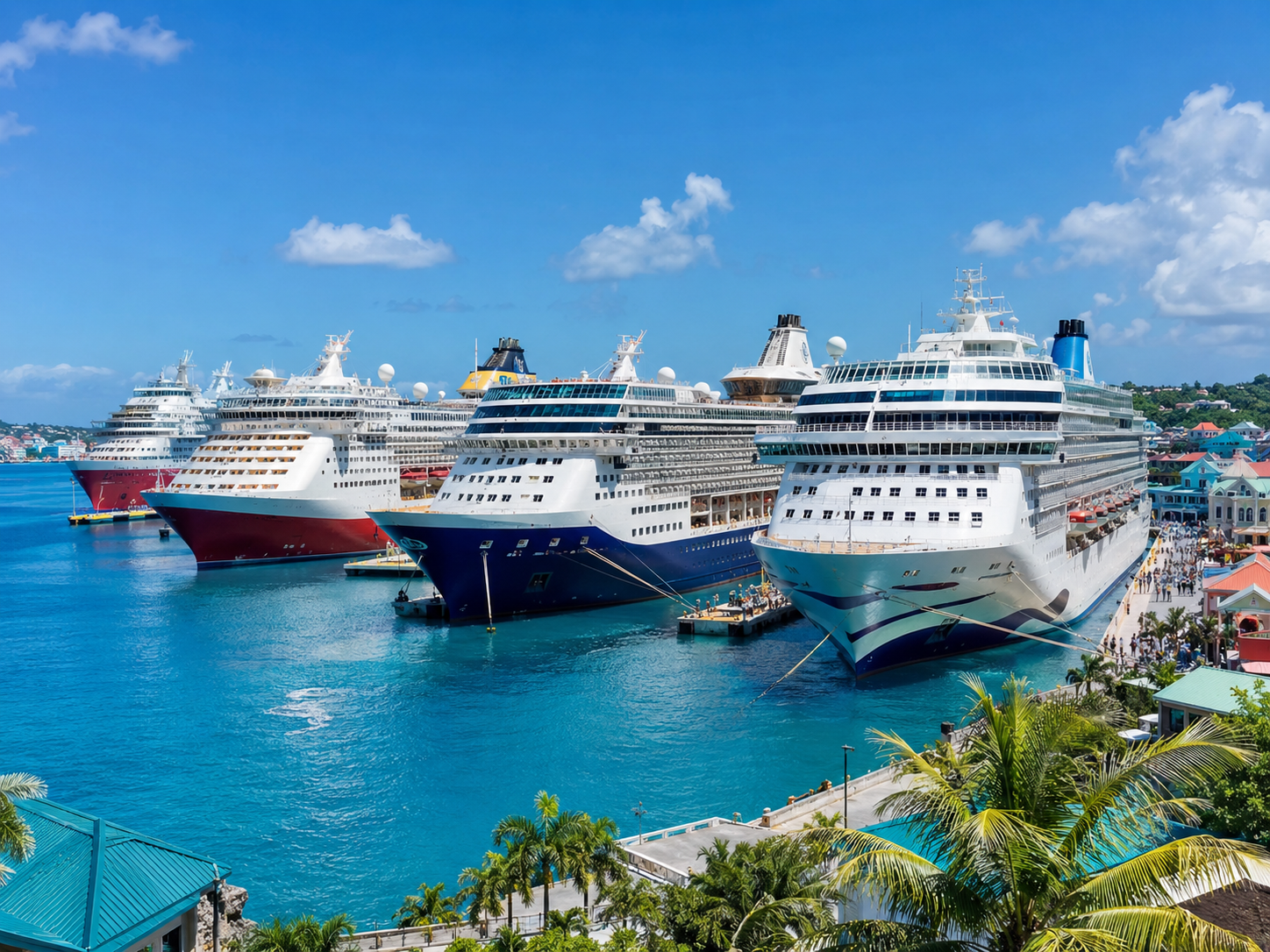
The cruise line matters less than the tier it sits in. Lines sort into three broad bands — mainstream (big ships, lowest fares, the most to do, the most upselling), premium (calmer ships, more included, slightly older crowd), and luxury (small ships, high all-in fares, service and destinations over slides and shows). Decide which band fits your budget, your travel party, and the vibe you actually want, and the shortlist of lines picks itself.
This guide — part of our New to Cruising guide — breaks down every tier and names who each line is wrong for, not just who it's right for. That's the part the cruise lines won't tell you.
Start with the tier, not the brand
Most "best cruise line" advice argues brand-versus-brand, which is the wrong fight for a first-timer. Royal Caribbean and Seabourn aren't really competitors — they're selling different vacations to different people. The useful question isn't "Royal or Carnival?" It's "do I want a big, busy, do-everything ship at a low base fare, or a quiet, polished, mostly-included one I pay more for upfront?" Answer that and you've narrowed seventeen lines to a handful.
The three tiers below aren't official — the industry blurs the lines, and a few brands (Celebrity especially) straddle two. But as a mental model for a first booking, they hold up well. If a particular bit of jargon trips you up as you read, our cruise glossary defines the lingo in plain English.
The three tiers at a glance
Here's the comparison the brand sites won't build — the three tiers side by side, with the honest catch for each. Skim it, then read the tier breakdowns below for the line-by-line detail.
| Tier | Who it's for | Price & what's included | The catch |
|---|---|---|---|
| Mainstream | First-timers, families, budget-minded groups who want maximum choice and activity. | Lowest base fare; most extras (drinks, dining, Wi-Fi, gratuities) cost more. | Big crowds and constant upselling; the final bill can climb well past the headline fare. |
| Premium | Couples and older travelers wanting a calmer, more refined ship without going all-in on luxury. | Mid-range fare; more is included, but not everything. | Fewer big-ship thrills; can feel sedate if you want nonstop action or are traveling with young kids. |
| Luxury | Travelers who prize space, service, and destinations over waterslides and Broadway shows. | Highest fare, but most or all extras are bundled in. | Small ships mean fewer activities; rarely suitable for kids, and the upfront cost is a real commitment. |
Quick check: which tier fits you?
Four questions, no email required. Answer honestly — the goal is to point you at the right band before you start comparing ships.
Pick the answer that sounds most like you.
Answer all four to see your tier.
Mainstream lines: the right starting point for most first-timers
This is where the overwhelming majority of first cruises happen, and for good reason: the big ships offer the widest range of price points, food, and entertainment, and the short three-to-seven-night itineraries are forgiving if it turns out cruising isn't your thing. The trade is crowds and a steady drumbeat of onboard spending. Each line below links to our full guide for that fleet.
Royal Caribbean Most to do
Carnival Best value
Norwegian (NCL) Flexible
MSC Euro value
Princess Destination-led
Holland America Classic
Celebrity Premium-leaning
Disney Best for kids
Virgin Voyages Adults only
The hybrid option: a ship-within-a-ship
If you want luxury service but still want waterslides, casinos, and Broadway shows, look into "ship-within-a-ship" enclaves. Programs like Norwegian's The Haven, MSC's Yacht Club, or Royal Caribbean's Suite Neighborhood offer private pools, dedicated restaurants, and butler service hidden away behind keycard access. You get the polish and quiet of a luxury line, but you can walk downstairs to the mega-ship amenities whenever you want. The catch is the price: these suites often cost as much as a true luxury sailing.
Premium and luxury lines: when it's worth paying up
Step out of the mainstream tier and the ships get smaller, the crowds thinner, and the fare higher — but a lot more is folded into that fare. Before you balk at the price, do the math we cover in what's actually included on a cruise: once you total the gratuities, drinks, Wi-Fi, dining, and sometimes excursions that a luxury fare bundles, the gap to a "cheap" mainstream sailing narrows. These lines reward travelers who value calm and service over slides and shows.
Within this top bracket, the industry often splits lines into upper-premium (like Viking, Azamara, and Cunard, which offer highly refined, destination-heavy experiences) and true ultra-luxury (like Regent, Seabourn, Silversea, and Crystal, featuring expansive suites, near one-to-one service, and highly inclusive fares). For a beginner, though, they all represent a distinct step up in price, space, and tranquility.
Classic luxury vs. expedition
Within the luxury tier, there is a hard split between classic cruising and expedition sailing. Classic luxury (like Regent or Crystal) focuses on indulgence, formal dining, and a relaxed pace in traditional ports. Expedition cruising (offered by lines like Silversea or Seabourn) is built for remote, rugged destinations like Antarctica or the Galápagos. Expeditions trade formal nights and lazy mornings for early wake-ups, Zodiac landings in rough weather, and onboard naturalists. Make sure you know which version of luxury you are paying for.
Viking Destination · adults
Cunard Heritage
Regent Seven Seas Most inclusive
Seabourn Ultra-luxury
Silversea Luxury · expedition
Crystal Refined classic
Azamara Immersion
How to actually decide
Once you've got a tier, five questions turn the shortlist into a single booking. Run through them in order — most people find one or two answers do the heavy lifting.
- Who's traveling? Kids push you toward Disney, Royal, or Carnival; an adults-only trip opens up Virgin and Viking. This is the single biggest filter.
- What's your real budget? Not the base fare — the all-in number once you add the extras you'll actually use. A "cheap" mainstream fare and an "expensive" premium one can land closer than you'd think.
- What do you want to do on board? Waterslides and shows, or a quiet deck and a good dinner? Match the ship's energy to yours.
- Where do you want to go? Some lines own certain regions — Princess and Holland America for Alaska, MSC for the Mediterranean, the luxury lines for expedition routes.
- How much do you hate being upsold? If constant add-on pitches sour a trip for you, paying up a tier for more included extras buys back your peace of mind.
Cabin choice interlocks with line choice more than people expect — the same budget buys a very different room across tiers, so it's worth reading our cruise cabin comparison alongside this page. And if you're still deciding whether to cruise at all, start with our honest take on whether a cruise is worth it.
Common mistakes when picking a line
The biggest one is booking on price alone and ignoring fit — a bargain fare on the wrong line for your travel party is no bargain. The second is trusting brand marketing over independent comparison; every line's own site says it's perfect for everyone, which is exactly why an outside view that names the trade-offs is worth more. The third is over-researching the line and under-researching the ship: within a single line, an older vessel and a brand-new one can feel like different companies. For the full rundown, see our first-time cruise mistakes to avoid, and for our named picks rather than a tier framework, read the best cruises for first-timers.
When you're ready to go deeper on any specific fleet, you can browse every ship across all lines and compare the actual vessels you'd sail on.
Frequently asked questions
What is the difference between mainstream, premium, and luxury cruise lines?
Mainstream lines (Royal Caribbean, Carnival, Norwegian, MSC, Disney) carry thousands of passengers on big ships, charge the lowest fares, and make much of their money on add-ons like drinks, dining, and excursions. Premium lines (Princess, Holland America, Celebrity) cost more but include more, run calmer ships, and skew slightly older. Luxury lines (Viking, Regent, Seabourn, Silversea, Crystal, Cunard, Azamara) carry far fewer guests, fold most extras into one high upfront fare, and emphasize service and destinations over waterslides and shows. The tier matters more than the brand for a first-timer.
Which cruise line is best for first-time cruisers?
There's no single best line — there's a best tier for your priorities. Most first-timers do well on a mainstream line because the big ships offer the widest range of food, entertainment, and price points, and the short itineraries are forgiving. Families lean Royal Caribbean or Disney; budget-minded groups lean Carnival or MSC; couples wanting a calmer, more polished ship often prefer Celebrity or Princess. Match the line to who's traveling and what you want to do, not to the brochure — and see our best cruises for first-timers for named picks.
Is a more expensive cruise line worth it?
Sometimes, but compare what's included before you compare headline fares. A premium or luxury fare often bundles gratuities, drinks, Wi-Fi, specialty dining, and even excursions that you'd pay for separately on a mainstream line, so the gap narrows once you total the real cost of a sailing. The trade is fewer activities and a quieter ship. If you value calm, space, and service over slides and shows, the step up is often worth it; if you want maximum variety for the lowest base price, it usually isn't.
What is the best cruise line for families with kids?
For families, the strongest mainstream options are Disney (unmatched kids' programming and characters, at a premium price), Royal Caribbean (the most onboard activities — waterslides, zip lines, rock walls), and Carnival (the best value for a fun, casual family trip). Princess and MSC also have solid kids' clubs at lower cost. Avoid adults-only lines such as Virgin Voyages and Viking, which don't allow children, and most luxury lines, which cater to adults.
Are luxury cruise lines all-inclusive?
Mostly, but the definition varies by line. Lines like Regent Seven Seas market themselves as the most inclusive, folding shore excursions and even airfare into the fare; others like Seabourn, Silversea, and Crystal include drinks, gratuities, and dining but charge for some excursions and premium experiences. Always read what "all-inclusive" covers on a specific sailing, because the upfront fare is high and the value depends on how much of the bundle you'd actually use.