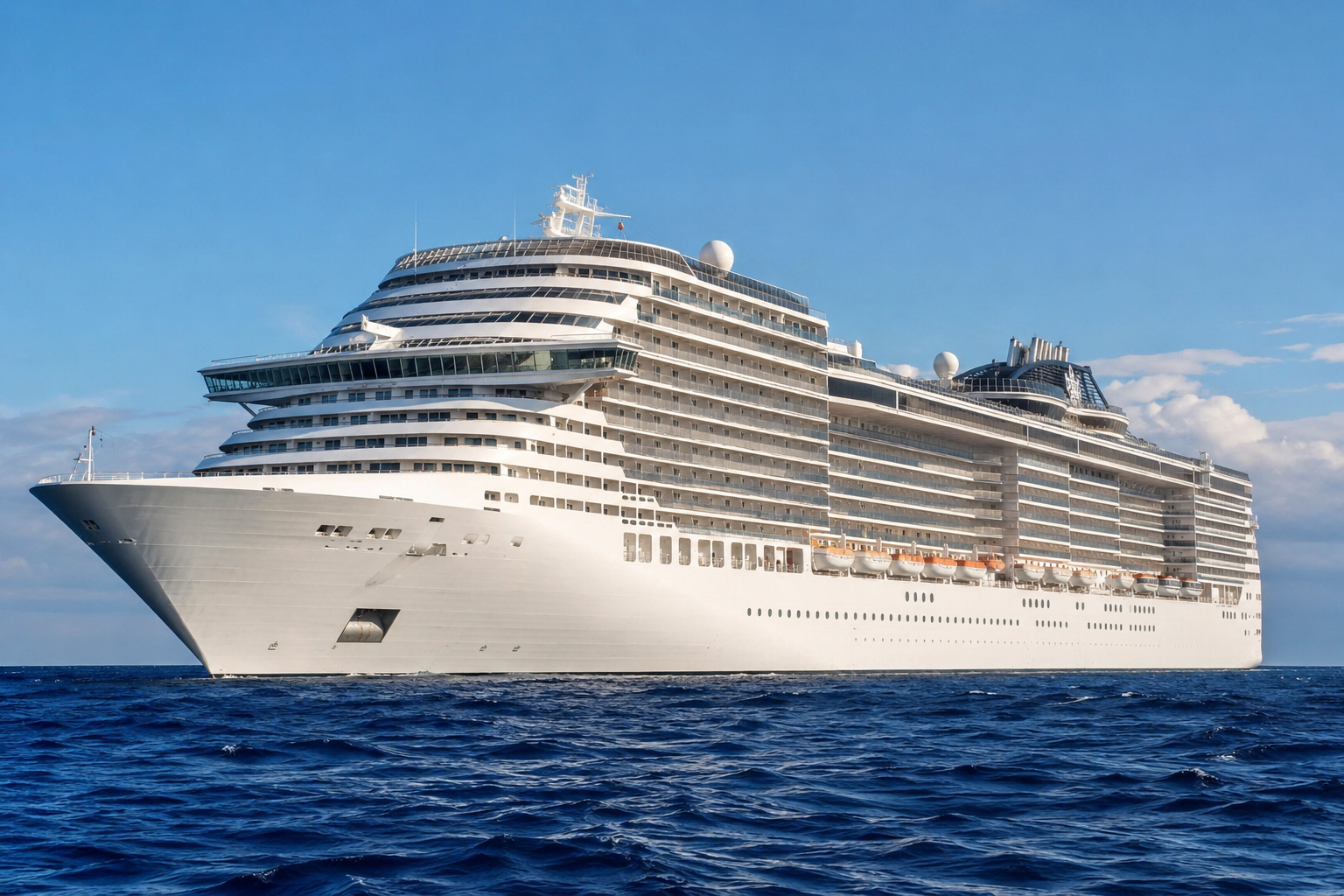
The best deck for most cruisers is a middle passenger deck, midship, with cabins on the decks above and below you. That spot is central enough that the dining room and elevators are a short walk, far enough from the noisy top and bottom of the ship that you'll sleep well, steadier in rough seas than a high deck, and usually cheaper than the premium upper floors.
The instinct to book as high as possible is the one to question — the highest cabins often sit directly under the pool deck. This guide, part of our New to Cruising guide, shows you what deck height actually trades, and the one quick check that separates a great cabin from a noisy one.
What the deck actually decides
"Which deck?" feels like a question about the view. It's really a question about five things at once, and they pull in different directions:
- Convenience. High decks put the pool, buffet, and sun decks a short stroll away; low decks put the gangway and the theater closer instead.
- Quiet. The calmest sleep is in the middle of the cabin block — away from the outdoor decks above and the venues below.
- Motion. Lower decks ride more steadily; the higher you go, the more you feel the ship roll.
- View. A higher balcony gives a longer sightline — though the difference between deck 8 and deck 12 is smaller than the price gap suggests.
- Price. The same cabin category almost always costs more the higher it sits.
No single deck wins all five. The skill is knowing which ones you care about — and recognizing that a middle deck quietly does well on every one of them, which is why it's the safe default.
The ship, top to bottom
Picture the passenger decks as a stack. Here's what each zone is like to live on — what it's good for, and what it costs you.
Notice the trap at the top: people book the highest cabin they can afford expecting the best of everything, but the highest passenger deck is frequently the one directly beneath the pool, the buffet, or a sports court. The view is lovely; the 6 a.m. soundtrack is not. A middle deck gives up almost nothing you'll notice and sidesteps that problem entirely.
The check first-timers skip: what's above and below you
Here's the single most useful habit, and the one almost no first-timer knows to do. Before you book, open the ship's deck plan and look at the deck directly above and directly below your cabin. Noise travels through floors and ceilings far more than through walls, so what's stacked on top of and under your room matters more than the deck number itself.
The goal is what cruisers call the cabin sandwich: other passenger staterooms above you and below you, acting as a buffer.
And here's what to avoid being stacked against — the cabins that look fine on a price list but ride loud:
- Directly under the pool or buffet deck — deck chairs dragged across the floor before dawn and cleaning carts late at night, straight through your ceiling. (The pool and Lido area is the classic culprit; our glossary explains the Lido deck if the term is new.)
- Directly above a theater, nightclub, atrium bar, or disco — bass carries upward and runs late.
- Next to elevators, stairwells, or the self-service laundry — foot traffic, chimes, and slamming doors all day and night.
- Far forward on a low deck — when the ship drops anchor or uses its bow thrusters to dock, you'll hear and feel it.
None of this requires insider knowledge — just two minutes with the deck plan and a glance at the floors above and below. It's the difference between "we booked a deck" and "we booked the right cabin on it."
Each zone at a glance
If you're weighing one deck against another, here's the quick read on what you gain and give up.
| Deck zone | The upsidewhat you gain | The catchwhat you give up | Book it if… |
|---|---|---|---|
| Upper cabins | Best views, quickest to the pool, sun, and buffet. | Priciest, most sway, risk of sitting under the Lido deck. | The view and top-deck access matter most and motion doesn't bother you. |
| Middle cabins | The all-rounder: central, quiet, steady, fairly priced. | No single thing is maxed out — it's the balanced choice, not the extreme one. | You want a safe default that does everything well. Most people. |
| Lower cabins | Quieter, steadier, cheaper, fast off the ship in port. | Longer walk or elevator ride up to the daytime action. | You value calm sleep, a smooth ride, and saving money over being near the pool. |
| Lowest cabins | Cheapest and calmest of all. | Far-forward rooms can hear the anchor and thrusters; furthest from amenities. | Budget and a steady ride are the priority — just stay midship, not far forward. |
"Upper," "middle," and "lower" are relative to each ship's own deck layout — aim for the middle band of passenger decks, toward the center of the ship's length.
Don't book the highest deck you can afford — book a middle deck, midship, with cabins above and below you. It quietly beats the top floor on noise, motion, and price, and gives up only a little on the view. Then check the deck plan to confirm nothing loud sits directly over or under your room.
Match the deck to your trip
The "best" deck shifts with what you're after. Find the description that sounds like your trip.
Convenience & buzz first
Lean upper…
- Book an upper-middle or upper deck, midship, for the view and quick top-deck access.
- Open the deck plan and make sure you're not directly under the pool or buffet.
- Accept a little more sway and a higher fare as the trade.
- Great for a short, sunny, port-light, party-leaning trip.
Quiet, value & steady first
Lean lower…
- Book a middle or lower deck, midship, sandwiched between cabin decks.
- Pocket the savings — an identical cabin lower down often costs less.
- Enjoy the steadier ride and quieter nights.
- Ideal for light sleepers, longer sailings, and anyone prone to motion.
A quick word on motion
If feeling the sea is a real concern, deck height becomes more than a comfort question. Lower decks sit closer to the ship's center of gravity, so they sway through a smaller arc — the same reason a metronome's base barely moves while its tip swings wide. Pair a low deck with a midship position and you're on the calmest part of the ship. We cover exactly where to book in our guide to the best cabin for avoiding seasickness, and the fore-to-aft side of the decision is explained in our glossary entry on bow, aft, and midship. If you're unsure whether the sea will bother you at all, our overview of getting seasick on a cruise walks through the odds and the remedies.
"Our honest take: the deck is the most over-thought and under-checked decision in cruise booking. People agonize over how high to go, then never look at what's stacked above and below them. Pick a middle deck, glance at the deck plan, and you've beaten 90% of cabins for the price of two minutes."
Putting it together
Deck height and cabin type are two halves of the same decision, and they're best made together: a balcony three decks too high can be noisier and bumpier than an inside cabin in the right spot. Our inside vs balcony vs suite comparison covers the type side — space, light, and price — so you can match it to the deck you've chosen. Picking the wrong cabin location is common enough that it's on our list of first-time cruise mistakes, and any deck-plan jargon you bump into is decoded in the cruise glossary. Finally, if motion is your worry, remember the ship and route matter as much as the deck — a large, modern stabilized ship on a calm itinerary rides smoothest of all.
Frequently asked questions
What is the best deck on a cruise ship?
For most people the best deck is a middle passenger deck, midship, with cabins on the decks both above and below you. That position is the sweet spot: it's central enough to keep walks to the dining room and elevators short, it sits away from the noisy top and bottom of the ship, it rides more steadily than a high deck, and it usually costs less than the premium upper floors. Higher is not automatically better — the highest cabins often sit directly under the pool deck. Aim for the middle of the stack, not the top.
Is a higher or lower deck better on a cruise?
Each direction trades different things. Higher decks give better views, faster access to the pool, buffet, and sun decks, and they feel more glamorous — but they cost more, sway more in rough seas, and can sit right below the noisy outdoor deck. Lower decks are quieter, steadier, cheaper, and quicker to the gangway in port, but they mean longer trips up to the action and can pick up anchor or thruster noise far forward. A middle deck splits the difference and is the safest default.
Which deck is the quietest on a cruise ship?
The quietest cabins are on a mid-level passenger deck that has cabins above and below it — what cruisers call a cabin sandwich. The buffer of other staterooms blocks the footsteps, music, and dragging deck chairs that travel through floors and ceilings. The noisiest spots, by contrast, are cabins directly under the pool or buffet deck, directly above a theater, nightclub, or atrium bar, and anything next to elevators, stairwells, or crew service areas. Quiet is less about the deck number and more about what sits immediately above and below you.
What cabins should you avoid on a cruise ship?
Avoid cabins directly below the pool and buffet decks (early-morning chair scraping and late-night cleaning carry straight through the ceiling), cabins directly above theaters, lounges, and nightclubs (bass travels upward until late), and cabins beside elevators, stairwells, or laundry rooms (constant foot traffic and chimes). Far-forward cabins on low decks can also feel and hear the anchor and bow thrusters when the ship docks. The fix is simple: open the deck plan and check what is on the deck above and below your cabin before you book.
Does the deck you pick change the price of the cabin?
Yes. On most ships the same cabin category costs more the higher you go, because higher decks are seen as more desirable. That means a low or middle deck is often the best value: an identical balcony cabin a few floors down can be noticeably cheaper while riding more smoothly and sitting in a quieter part of the ship. If budget matters, a lower-but-central cabin is one of the easiest ways to spend less without giving up much that you'll actually notice. For more ways to trim the bill, see our guide to saving money on a cruise.
Should I pick a higher deck for the view?
Only if the view genuinely matters to you and motion doesn't. A higher balcony does give a longer sightline over the water, and being near the top makes the pool and sun decks a quick walk. But the view from a balcony eight decks up and ten decks up is more similar than the price gap suggests, and the higher cabin sways more and may sit under the noisy Lido deck. If you love a dramatic view, go up — just check the deck plan so you aren't directly beneath the pool deck, and accept a bit more motion in exchange.