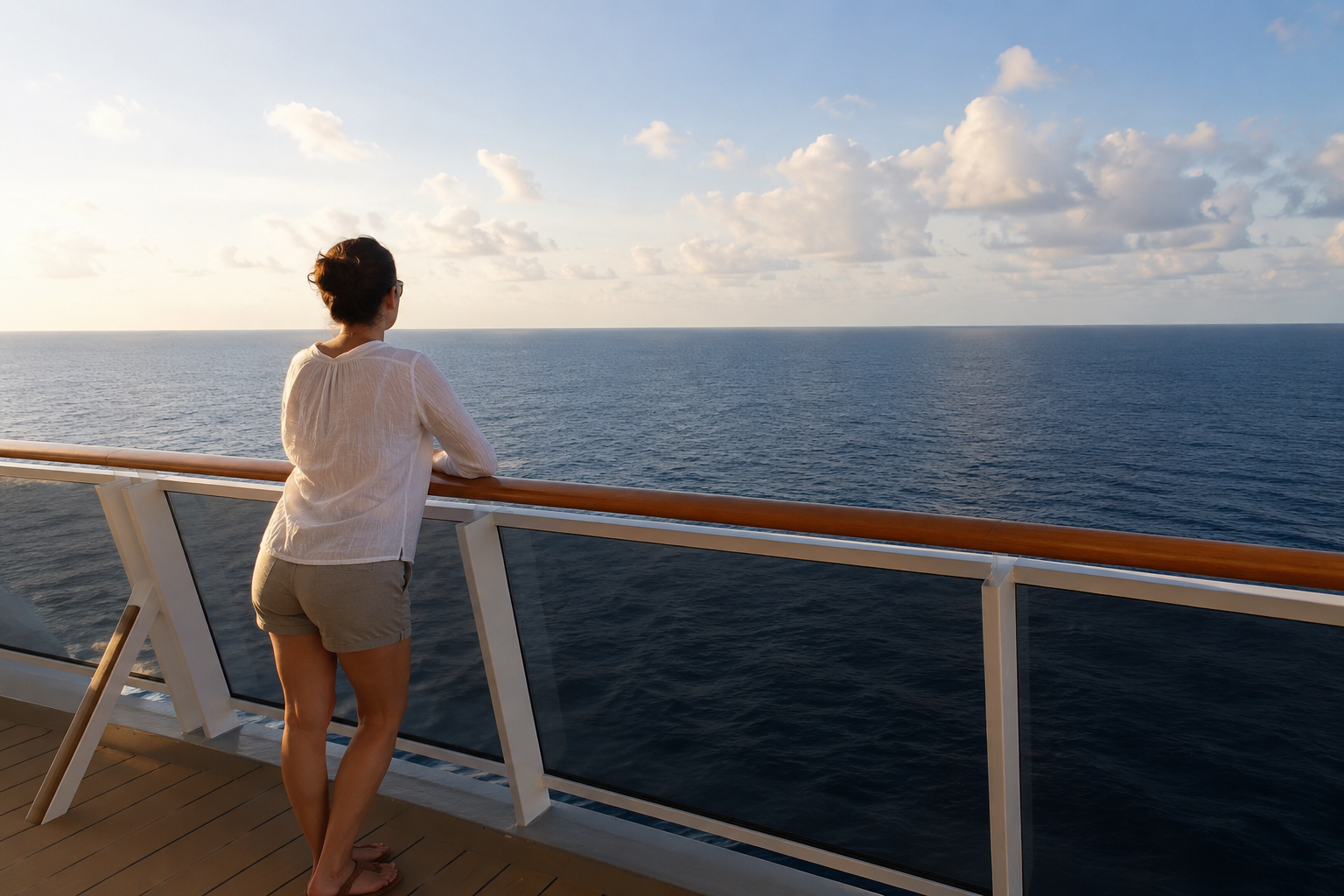
The whole game of cruising solo comes down to one fee: the single supplement, the surcharge you pay for filling a two-person cabin alone. Beat that, and a cruise is one of the best-value, lowest-stress ways to travel by yourself. Two kinds of cruise beat it cleanly: ships with purpose-built solo cabins priced for one (Norwegian leads here, with Royal Caribbean and a growing list behind it), and any sailing running a reduced- or waived-supplement promotion (Virgin Voyages and the luxury and river lines do this often).
This guide — part of our New to Cruising guide — ranks the lines by how genuinely solo-friendly they are, decodes the solo cabin types, and lays out how to beat the supplement even on a ship that has no solo cabin at all.
Why cruising solo costs more (and by how much)
Almost every cruise fare you see advertised is a per-person, double-occupancy price — it quietly assumes two people will share the cabin and each pay. Show up as one, and the line still wants the revenue it expected from that room, so it adds the single supplement. The most common supplement is 100%, which effectively doubles the headline fare; in practice it ranges from a modest surcharge to the full second fare, depending on the line, the ship, and how confident they are the sailing will sell out.
It feels unfair, and in a sense it is — you can book a hotel room for one without a partner penalty. But the logic is real: the cruise line also loses the second guest's onboard spending (drinks, gratuities, excursions, the casino, the gift shop), and it prices the cabin to recoup most of that. The practical takeaway is simple: the supplement is a number you can manage, not a fixed law. Pick the right ship or the right sailing and it shrinks toward zero. Pick carelessly and you genuinely do pay for two.
Which cruise lines actually want solo travelers
There's a real divide in the industry. A handful of lines have invested in solo travelers — building cabins for one, creating social spaces, hosting meetups — while others simply apply a full supplement to a standard room and call it a day. Here's an honest, independent read on where the major lines land, with the catch worth knowing for each.
| Cruise line | Solo-friendly?our read | Built-in social scene | The catch |
|---|---|---|---|
| Norwegian (NCL) | Best overall | Studio cabins + private Studio Lounge for solo guests | Studios are limited and book early; newest ships carry fewer of them. |
| Virgin Voyages | Best for adults | Adults-only (18+), very social ships; solo cabins + frequent supplement discounts | No kids by design; the reduced supplement is a promotion, not a permanent rate. |
| Royal Caribbean | Solid | Solo studios on some ships + hosted solo meetups | No dedicated solo lounge; studios only on certain Quantum- and Oasis-class ships. |
| Cunard | Solid (classic) | Dedicated single cabins, solo host program, ballroom dance hosts | Formal, traditional style; skews older and pricier. |
| Holland America / Celebrity | Case by case | Some solo cabins on newer ships; solo gatherings | Solo cabins are scarce; otherwise you pay a standard supplement. |
| Luxury & river lines | Often waived | Small-ship, sociable, host-led; frequent low or zero supplements | Higher base fares — the value is in the waiver, not a low sticker price. |
| Carnival / MSC / Princess | Charges the supplement | Big, friendly ships; occasional solo meetups | Few or no solo cabins, so a standard room usually means paying for two. |
An independent read, framed evergreen — solo cabin counts and promotions shift by ship and season, so confirm the specific sailing. To compare these lines on everything beyond solo value, see our guide to the best cruise lines for first-timers.
Solo cabin types, decoded
When a line "has solo cabins," that can mean several different things. Knowing the categories helps you read a deck plan and spend deliberately — the same logic our full cabin comparison guide applies to couples and families.
- Studio interior — the original solo cabin: a compact, windowless room priced for one, no supplement. The best value if you only sleep there. On Norwegian, studios also unlock the shared Studio Lounge.
- Virtual-balcony & sea-view solo cabins — solo rooms with a window or a floor-to-ceiling screen showing a live ocean view, for a little more than an interior studio. A good middle ground if a windowless room feels claustrophobic.
- Solo balcony / super-studio — rarer, larger solo cabins with a real balcony. They cost more, but still beat paying a full supplement on a standard balcony cabin.
- Single cabins (classic lines) — Cunard and a few traditional lines keep genuine one-person cabins, a holdover from the ocean-liner era, often paired with solo host programs.
Whatever the type, the rule is the same: solo cabins are limited and disappear first. If your line and date have them, booking early is the entire strategy.
Beating the supplement when there's no solo cabin
Most ships still don't have purpose-built solo cabins. That doesn't mean you're stuck paying double — it means you switch tactics from "find a solo cabin" to "find a sailing the line is willing to discount."
Hunt for reduced- and waived-supplement promotions
Lines quietly drop the supplement — sometimes to zero — on sailings they're less sure they'll fill. These promotions cluster on softer dates: shoulder-season weeks, repositioning voyages, and less-hyped itineraries. Virgin Voyages runs reduced-supplement offers on its sea-view cabins regularly, and luxury and river lines waive it outright on select departures. The trick is to stay flexible on date and destination, because the supplement is almost always smallest on the cruise the line is least certain about.
Use a solo-cruise specialist or a share program
A travel agent who specializes in solo travel earns their keep here: they track which sailings have waiver promotions and can sometimes arrange a guaranteed-share program, where the line pairs you with a same-gender roommate so you each pay the standard per-person fare with no supplement at all. It's not for everyone — you're sharing a cabin with a stranger — but it's the single cheapest way to sail solo when it's offered.
Time it like any other fare
Everything that lowers a normal cruise fare lowers the solo cost too, because the supplement is usually a percentage of that fare. Booking when the lines compete hardest, sailing in shoulder season, and choosing a shorter trip all stack with the tactics above. A first solo cruise is often a shorter 3- or 4-night sailing by design — lower total cost, lower commitment, and a low-risk way to find out whether you love it. For the full set of levers, see our guide on what a cruise actually costs and how to save money on a cruise.
Never accept a flat full supplement on a standard cabin as your only option. Either book a cabin built and priced for one, or book a sailing where the line has agreed to discount the supplement. If you can't do one of those two things on your chosen date, change the date or the ship — not your willingness to pay double.
Will I be lonely? The social side
It's the question behind most solo-cruise anxiety, and the honest answer is reassuring: a ship is unusually easy to be alone or sociable on, entirely at your own pace. You're never managing logistics, never eating in a restaurant feeling conspicuous, and never far from company if you want it.
The social scaffolding is built in. Nearly every major line now hosts a daily solo-travelers meetup — an informal gathering, usually early in the cruise, where solo guests find their people for the week. Beyond that, shared dining tables, trivia, classes, and bars make conversation happen without effort. Two lines make it especially easy: Norwegian, whose Studio guests share a private lounge that becomes a natural solo clubhouse, and Virgin Voyages, whose adults-only ships attract a sociable, like-minded crowd. And the quiet appeal of cruising alone is real too: your room, your meals, and your entertainment are all in one secure place, so solo travel here feels safe and genuinely restful.
So which should you book?
It comes down to what you most want from the trip — a guaranteed solo cabin and built-in community, or the lowest possible supplement on a date that works for you.
Want a dedicated solo cabin + community
Book a solo-cabin ship…
- Norwegian, for Studios plus the private Studio Lounge — the easiest ship to meet people on.
- Royal Caribbean, for solo studios and big-ship variety on Quantum-class ships.
- Virgin Voyages, for a social, adults-only sailing with solo cabins.
- Book early — solo cabins are few and go first.
Want the lowest supplement, flexible on ship
Chase a waiver sailing…
- Watch for reduced- or zero-supplement promotions (Virgin, luxury and river lines).
- Stay flexible on date — shoulder season and repositioning sailings discount most.
- Use a solo-cruise specialist or a guaranteed-share program.
- Start with a shorter first sailing to keep the total low.
"Our honest take: don't pick a line first and then wince at the solo price. Pick the supplement first. The best solo cruise is simply the one where you aren't paying for an empty second bed — and on the right ship or the right date, that's most of them."
From here, the natural next steps are choosing your line — our best lines for first-timers guide compares them on everything beyond solo value — and picking the cabin, covered in the cabin comparison. Solo travel is the opposite end of the spectrum from cruising with kids, but both reward the same move: choosing the ship that's actually built for how you travel. If any term here is new, the cruise glossary explains the jargon in plain English.
Frequently asked questions
Do solo travelers have to pay double on a cruise?
Not always, but it's the default. Because cruise fares are advertised per person assuming two people share the cabin, a solo traveler in a standard room usually pays a single supplement to cover the missing second fare — most commonly an extra 100 percent, which effectively doubles the price, though it can range from a small surcharge to the full second fare depending on the line and sailing. You avoid this entirely by booking a purpose-built solo cabin (priced for one person, no supplement) or by catching a sailing where the line is running a reduced-supplement promotion.
Which cruise line is best for solo travelers?
For most first-time solo cruisers, Norwegian Cruise Line is the strongest all-round choice: it pioneered the solo Studio cabin priced for one person and pairs it with a private, keycard-access Studio Lounge that makes meeting other solo guests effortless. Virgin Voyages is the standout for solo adults who want a social, design-forward, child-free ship and frequently discounts the supplement. Royal Caribbean offers solo studios on several ships plus hosted meetups, and luxury and river lines increasingly waive the supplement outright. The best line depends on whether you most want a dedicated solo cabin, a built-in social scene, or simply the lowest supplement on your date.
What is a studio cabin on a cruise?
A studio (or solo) cabin is a stateroom designed and priced for one guest, so there's no single supplement to pay — you simply pay the fare for the room. They're typically compact interior rooms, though some lines now offer solo cabins with windows, virtual balconies, or even real balconies. On Norwegian Cruise Line, studio guests also get access to a shared private lounge that acts as a social hub for solo travelers. The trade-off is that solo cabins are limited in number and book up early, so they reward planning ahead.
How do you avoid the single supplement on a cruise?
There are four reliable routes. First, book a purpose-built solo or studio cabin, which carries no supplement at all. Second, watch for reduced or waived single-supplement promotions, which lines run to fill cabins on softer sailings — often shoulder-season weeks, repositioning voyages, or less-hyped itineraries. Third, work with a travel agent or solo-cruise specialist who tracks those waiver sailings and can sometimes arrange a guaranteed-share program that pairs you with a same-gender roommate. Fourth, be flexible on date and destination, because the supplement is almost always smallest on the sailings the line is least sure it can fill.
Are cruises good for solo travelers, or will I be lonely?
Cruises are one of the easier ways to travel alone without feeling alone, precisely because the social structure is built in. You can be as private or as sociable as you like: eat at a shared table, join the daily solo-travelers meetup many lines host, drop into trivia, classes, and bars where conversation happens naturally, or simply enjoy your own company with no logistics to manage. Ships with dedicated solo lounges (Norwegian) or an adults-only, social atmosphere (Virgin Voyages) make connecting especially easy, but every major line now runs some form of solo meetup. Safety and ease are part of the appeal — your room, meals, and entertainment are all in one secure place.
Is Norwegian or Royal Caribbean better for a solo cruise?
Both offer solo cabins, but they solve the social side differently. Norwegian's Studios come with an exclusive Studio Lounge — a private space where solo guests gather for coffee, drinks, and informal mixers — which makes it the easier ship to meet people on as a solo traveler. Royal Caribbean's solo studios (on its Quantum-class and a couple of Oasis-class ships) don't include a dedicated lounge, but the line hosts solo meetups and has more big-ship activities to fill a day. Choose Norwegian if the built-in solo community matters most; choose Royal Caribbean if you want the widest range of onboard activity and don't mind making your own introductions.