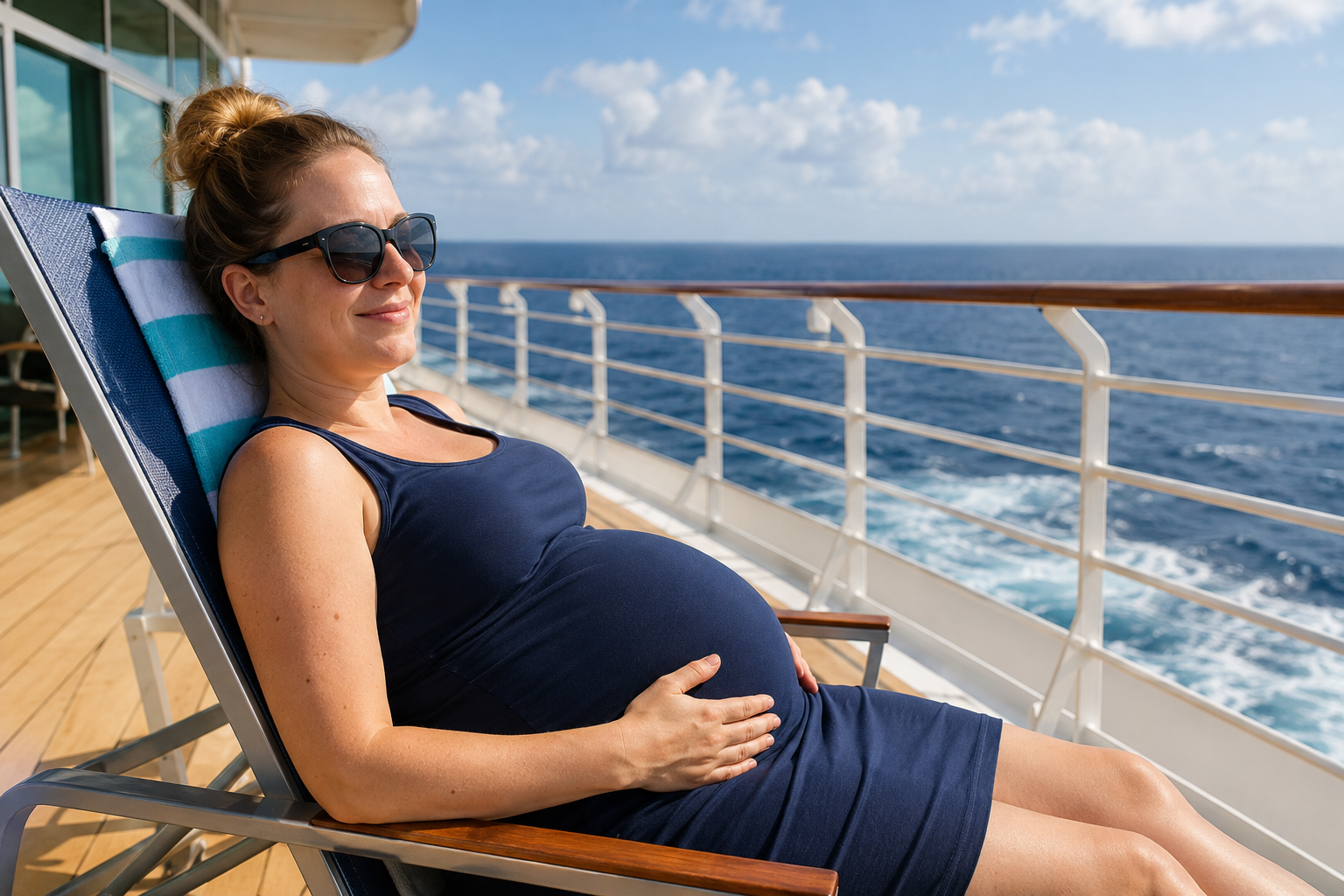
Yes, you can cruise while pregnant — and for a healthy, low-risk pregnancy it can be a wonderfully low-effort getaway. The one rule that's nearly identical across every major line: you can't have entered your 24th week of pregnancy during the sailing. Most lines also want a doctor's "fit to travel" letter at the terminal. Plan it for the second trimester, comfortably under that 24-week line, and you're squarely inside what the industry allows.
This guide — part of our New to Cruising guide — lays out each line's cutoff policy in one place, walks through the best trimester to sail, and covers the practical comfort and safety details onboard. One thing first, and we'll repeat it: this is general information, not medical advice. Your own doctor and your line's current written policy are the two authorities that actually decide whether you sail.
CruiseProdigy is an independent cruise resource, not a medical provider. Everything here is general guidance to help you plan. Your obstetrician or midwife is the only person who can tell you whether sailing is safe for your specific pregnancy — ask them before you book, and follow their advice over anything you read online.
The one rule every cruise line shares: 24 weeks
Cruise pregnancy policies sound complicated until you notice they almost all land on the same number. From Royal Caribbean to Carnival to Disney, the threshold is the same: a passenger who will have entered the 24th week of pregnancy at any point covered by the policy cannot sail. That's roughly the end of the second trimester, and the reason is straightforward — a ship's medical center is equipped for basic care only, not for managing premature labor or newborn intensive care far from shore.
Sources: published pregnancy policies from Royal Caribbean, Carnival, Norwegian, Princess, Celebrity, MSC, Holland America, Disney, and Virgin Voyages (verified June 2026). Policies change — confirm yours when you book.
The one piece of fine print worth reading twice is when each line measures the 24 weeks. Some count from the first day of your cruise; others count to the last day or the end of your travel. On a 3- or 4-night sailing the difference is trivial, but on a two-week voyage those extra days can push you over the line, so always plan against the final day of the trip. The table below lays out exactly how each line draws it.
Cruise-line pregnancy policies, line by line
This is the comparison no AI summary and no single forum thread reliably assembles: how the major lines word their pregnancy cutoff, when they measure it, and whether you'll need a doctor's note. Read down for your line; read across for the detail that catches people out.
| Line | Max pregnancy allowed | Measured when | Doctor's letter? | The catch |
|---|---|---|---|---|
| Royal Caribbean | Under 24 weeks | At the start of and any time during the cruise | Yes | "Fit to travel" note must state your week count at sailing and confirm a healthy, low-risk pregnancy. |
| Celebrity | Under 24 weeks | At the start of and any time during the cruise | Yes | Same group as Royal Caribbean; same wording and letter requirement. |
| Carnival | 24 completed weeks or less | At disembarkation (end of cruise) | Yes | Letter must confirm mother and baby are healthy and the pregnancy is not high-risk. |
| Norwegian | Under 24 weeks | By the time travel concludes | Yes | Doctor's letter (on letterhead) with due date must be sent to NCL's Access Desk in advance. |
| Princess | Not entering 24th week | By the last day of the cruise | Yes | Letter must confirm good health, fitness to travel, and not high-risk. |
| MSC | Under 24 weeks | By the end of the cruise | Yes | Medical certificate required; European sailings can be stricter on documentation. |
| Holland America | Not begun 24th week | Before or during the cruise | Yes | Letter must state the due date plus fitness to travel and low-risk status. |
| DisneyStrictest | Under 24 weeks | At embarkation or during the cruise | No — not accepted | Will refuse passage at 24+ weeks and will not accept a doctor's note or liability waiver to override it. |
| Virgin Voyages | Under 24 weeks | By the end of the voyage | On request | Adults-only line; may request a medical certificate and can deny boarding without it. |
Policy wording is summarized and was verified in June 2026; lines update their rules and documentation requirements without notice. Always read your specific line's current pregnancy policy and confirm with the line before you book. Luxury and small-ship lines not listed here generally apply the same 24-week standard.
Two takeaways jump out. First, the 24-week wall is genuinely industry-wide, so there's no "lenient line" to shop for — if you'll be past it, you'll be past it everywhere. Second, the meaningful differences are at the edges: whether the line counts from the first or last day, and whether they require the doctor's letter (almost all do) or refuse to even consider one (Disney). Because line policy can tip a close decision, it's worth confirming before you fall in love with a sailing — our guide to the best cruise lines for first-timers can help you weigh the rest of the choice.
Which trimester should you cruise in?
The lines set the outer limit at 24 weeks, but the more useful question is which stretch of pregnancy makes for the best trip. Here's the honest read on each, alongside what your doctor will likely tell you.
Allowed, but often the least comfortable
Every line permits it, and plenty of people sail early without a hitch. But this is when morning sickness and fatigue peak — and seasickness from the ship's motion can pile right on top of nausea you already have. It's also the window when miscarriage risk is naturally highest, which is the part that gives many expectant cruisers pause about being days from a hospital. None of that is a reason you can't go; it's a reason to talk it through honestly with your doctor first.
Verdict: Fine if you feel good — but don't be surprised if queasiness defines the trip.
The sweet spot — this is the babymoon window
For most healthy pregnancies, the early-to-mid second trimester is the widely recommended time to travel: the nausea has usually faded, your energy is back, you're still mobile and comfortable, and you're not yet at the size where moving around a ship is a chore. Just remember the cap — you have to stay under 24 weeks for the whole sailing, so the back half of the second trimester is where the cruise line's line and your comfort line meet. Aim for roughly weeks 14 to 23 and you're in the clear.
Verdict: The one to book. Comfortable, low-risk, and within every line's policy.
Effectively off the table
The 24-week cutoff means a standard ocean cruise in the third trimester simply isn't allowed — you'd be turned away at the terminal, fare unrefunded. Even setting policy aside, the late-pregnancy risks of travel far from specialized care are exactly why the rule exists. If you're past 24 weeks and craving a getaway, this is the season for a land-based trip close to home, not a sailing.
Verdict: Not permitted. Save the cruise for after the baby arrives.
The doctor's letter and travel insurance
Two pieces of paperwork do more to protect your trip than anything else, and first-timers underestimate both.
The "fit to travel" letter. On nearly every line (Disney excepted, since it won't accept one), you'll need a signed note from your physician, on letterhead, that states how many weeks along you'll be at sailing, gives your due date, and confirms that you and the baby are healthy and the pregnancy is not high-risk. Carry the original to the terminal — staff can and do ask for it at check-in, and without it you can be denied boarding with no refund. Get it dated close to your sail date, not months early.
Travel insurance is not automatic coverage. Many standard policies treat a normal pregnancy as a pre-existing condition and cover only unforeseen complications — some exclude pregnancy claims altogether. The coverage that matters most at sea is emergency medical evacuation, because a ship can only stabilize you before getting you to a real hospital, and an at-sea evacuation can run into the tens of thousands of dollars. Read the pregnancy and pre-existing-condition wording carefully, or choose a plan that explicitly covers it; our guide to whether cruise travel insurance is worth it walks through what to look for, and the travel-insurance glossary entry defines the terms.
Staying comfortable and safe onboard
Once you're cleared and booked, a cruise actually plays to a pregnant traveler's needs — you unpack once, your room and the food and a doctor are all a short walk away, and there's nowhere you have to be. A few adjustments make it smoother:
- Book a lower, midship cabin. The middle of the ship, on a lower deck, feels the least motion — the same trick that helps with queasiness. Our guides to the best cabin for avoiding seasickness and choosing a cabin explain why, and an oceanview or balcony with a horizon to look at helps too.
- Clear any seasickness remedy with your doctor. Not all motion-sickness medications and patches are recommended in pregnancy. Ginger and acupressure wristbands are gentler options to ask about — see our cruise seasickness guide — but check before you pack anything.
- Skip the hot tubs and saunas. Overheating is the concern, so give the whirlpools, saunas, and thermal-spa heat rooms a pass, and be sensible in strong sun and heat ashore.
- Eat to normal pregnancy rules. The buffet and raw bar make it easy to forget — avoid undercooked or raw seafood and meat, unpasteurized soft cheeses, and anything left sitting out. Stick to freshly cooked and hot.
- Take tenders and gangways slowly. Some ports require a tender boat to get ashore, and stepping between a moving boat and a dock is no place to rush — accept a crew member's hand, and skip the tender in rough water.
- You still do the muster drill. The brief safety drill is mandatory for everyone; it's short, and you can sit if you need to.
Green light
A cruise makes good sense if…
- You're in the second trimester and will stay under 24 weeks all sailing.
- Your pregnancy is healthy and low-risk, and your doctor has cleared you.
- You've got your "fit to travel" letter and pregnancy-aware insurance.
- You're drawn to a relaxed, unpack-once trip over an active, port-heavy one.
Think twice
Reconsider or wait if…
- You'd cross into your 24th week at any point during the trip.
- Your pregnancy is high-risk or you've had complications.
- You're early-first-trimester and prone to nausea or anxiety far from care.
- The itinerary is remote, with many days at sea between ports.
Book so you'll be safely under 24 weeks on the last day of the cruise — with a few weeks of margin, not a few days — and get your doctor's sign-off before you put money down. Those two moves keep you inside every line's policy and out of the one scenario nobody wants: turned away at the terminal, or unwell far from a hospital.
Our honest take
A second-trimester cruise is one of the best babymoons going — genuinely restful, easy on a tired body, and within the rules every major line plays by. Where people get burned is treating the 24-week cap as a target to nudge up against rather than a wall to stay well clear of, and treating the doctor's letter as a formality instead of the document that gets them aboard. Plan with margin, get the paperwork right, and let the ship spoil you.
"Our honest take: cruise in the second trimester, stay comfortably under 24 weeks, carry the doctor's note, and pick a lower midship cabin. Do that and a cruise is about the gentlest vacation a pregnancy will let you take — but the 24-week line is a hard wall, not a suggestion, and your doctor's word beats ours every time."
Traveling as a family this time, or planning for next time? Our guide to cruising with kids covers the same special-audience fine print once the baby arrives, the cruise packing list has what to bring, and any unfamiliar terms — from muster drill to tender port — are explained in plain English in our cruise glossary.
Frequently asked questions
Can you go on a cruise while pregnant?
Yes, in most cases. Every major cruise line welcomes pregnant passengers up to a point, and a cruise can make a relaxed, easy babymoon. The near-universal rule is that you cannot have entered your 24th week of pregnancy during the sailing — roughly the end of the second trimester. As long as you're comfortably under that line and your own doctor has cleared you to travel, cruising while pregnant is common and generally considered safe for a healthy, low-risk pregnancy. This is general information, not medical advice: always confirm with your doctor and read your specific line's current policy before you book.
How many weeks pregnant can you be to go on a cruise?
The standard cutoff across the major lines — Royal Caribbean, Carnival, Norwegian, Princess, Celebrity, MSC, Holland America, Disney, and Virgin Voyages — is that you must not have entered your 24th week of pregnancy at any point during the cruise. The subtle but important detail is when each line measures it: some count from the first day of the sailing, while others count to the final day or the end of your travel, so on a long voyage a few days can matter. The safe way to plan is to make sure you'll be under 24 weeks on the last day of the trip, with margin to spare.
Do you need a doctor's note to cruise while pregnant?
On almost every line, yes. Most lines require a physician's "fit to travel" letter, on letterhead, stating how far along you are (in weeks) and confirming that you and the baby are healthy and the pregnancy is not high-risk. Bring it to the terminal — without it you can be denied boarding, and the fare is not refunded. Disney is the strict exception: it refuses passage to anyone who will enter their 24th week during the cruise and will not accept a doctor's note or liability waiver to override the rule. Check your line's exact documentation requirement when you book.
Is it safe to cruise during the first trimester?
The lines allow it, and for a healthy pregnancy it's generally fine, but many expectant cruisers find the first trimester the least comfortable time to sail. Early-pregnancy nausea and fatigue can stack on top of any motion the ship has, and miscarriage risk is naturally highest in these weeks — far from shore-based care is not where most people want to be if something goes wrong. That's why the second trimester (roughly weeks 14 to 27, while staying under the 24-week sailing cap) is the widely recommended sweet spot: morning sickness has usually eased, energy is back, and you're still mobile. Talk it through with your doctor before booking.
Does travel insurance cover pregnancy on a cruise?
Not automatically. Many standard travel-insurance policies treat a normal, expected pregnancy as a pre-existing condition and exclude routine pregnancy and childbirth, covering only unforeseen complications — and some exclude pregnancy-related claims entirely. Because a shipboard medical center can only provide basic care, the part that matters most for a pregnant cruiser is emergency medical evacuation, which can cost tens of thousands of dollars if you need to be taken off the ship. Read the policy's pregnancy and pre-existing-condition wording closely, or buy a plan that explicitly covers pregnancy, and confirm the medical-evacuation limit before you sail.
What should you avoid onboard when cruising pregnant?
The same things you'd avoid on land, plus a few cruise-specific ones. Skip the hot tubs and saunas (overheating is the concern), and be cautious in heat and sun. Follow normal pregnancy food guidance at the buffet and raw bar — avoid undercooked or raw seafood and meat, unpasteurized cheeses, and anything that's been sitting out. Don't take seasickness medication or motion-sickness patches without checking with your doctor first, since not all are recommended in pregnancy; ginger and acupressure bands are gentler options to ask about. Choose a lower, midship cabin for the smoothest ride, take tender boats and steep gangways slowly, and don't overdo the walking. When in doubt, ask the onboard medical team.